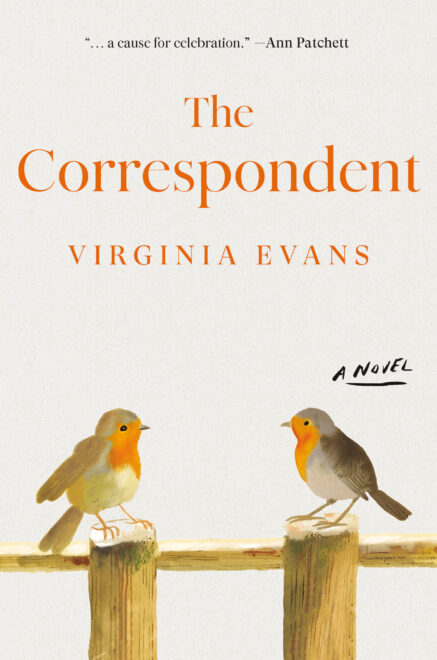
There is something rather intimate about reading someone else’s letters. Unlike conversations, which disappear almost as soon as they’re spoken, letters leave behind a record of what someone was thinking at a particular moment in their life. They can be affectionate, petty, funny, defensive or painfully honest, sometimes revealing considerably more about the writer than they intended.
In The Correspondent, Virginia Evans builds an entire novel around this idea, introducing readers to Sybil Van Antwerp, a sharp-tongued, fiercely independent woman in her seventies who has spent much of her life communicating through letters.
Sybil writes to practically everyone. Her family, old friends, former colleagues, neighbours, customer service representatives and even famous authors regularly receive her carefully composed correspondence. She has opinions about almost everything, rarely hesitates to share them and firmly believes in the value of putting things in writing.
But beneath her confident, occasionally exasperating personality is a woman who has spent decades avoiding certain truths about her own life.
Published in 2025, The Correspondent became an unexpected word-of-mouth bestseller and went on to win the 2026 Women’s Prize for Fiction. It’s an impressive achievement for a debut novel with such a quiet premise, particularly one told almost entirely through letters and emails.
What makes the book appealing is its suggestion that an ordinary life, with all its small disappointments, difficult relationships and accumulated regrets, can be just as compelling as a story filled with extraordinary events.
There are no elaborate mysteries to solve or dramatic adventures to undertake. Instead, Evans asks readers to piece together the life of a complicated woman through the things she chooses to tell other people, and perhaps more importantly, the things she doesn’t.
Synopsis
Sybil Van Antwerp is seventy-three, divorced, retired from a successful career in the legal profession and firmly settled into a life governed by her own routines.
She enjoys gardening, reading and corresponding with the people around her. Her letters are thoughtful, articulate and occasionally rather blunt, and she approaches the business of maintaining relationships with the same precision she once brought to her professional life.
Through her correspondence, readers gradually become acquainted with her brother Felix, her adult children, old friends, former colleagues and various acquaintances who enter and leave her life.
Some letters are affectionate and humorous. Others contain complaints, unsolicited advice or observations about the world that Sybil believes everyone would benefit from hearing.
But not all her relationships are straightforward.
Her bond with her daughter is strained, memories from her past continue to trouble her, and certain letters reveal an emotional vulnerability that she rarely acknowledges in her everyday interactions.
Meanwhile, her eyesight is deteriorating, threatening the independence and carefully organised routines she has long relied upon.
As the years pass, Sybil must confront difficult questions about grief, forgiveness and the relationships she may have neglected while protecting herself from further disappointment.
Told through letters and emails exchanged over several years, The Correspondent gradually reveals the story of a woman who has spent a lifetime communicating with others but may not have been entirely honest with herself.
What Works Well
The most distinctive feature of The Correspondent is undoubtedly its structure.
An entire novel composed primarily of letters and emails sounds like something that could become repetitive fairly quickly. After all, there are only so many ways to make someone’s correspondence interesting, particularly when the central character spends much of her time gardening, reading and offering opinions about other people’s decisions.
Yet the format gives Evans an unusually effective way of developing Sybil’s personality.
We learn about her not through lengthy descriptions or direct explanations, but through the way she addresses different people.
Her letters to family members reveal one side of her character, while her exchanges with acquaintances and strangers expose others. She can be generous, perceptive and surprisingly compassionate, but also judgmental, inflexible and completely oblivious to how difficult she can be.
That contradiction is what makes her interesting.
Sybil is not the sort of elderly protagonist who has been written to dispense gentle wisdom and offer reassuring observations about life. She has strong opinions, considerable pride and a tendency to believe that her interpretation of events is the correct one.
In fact, she can be thoroughly exasperating.
But I think that’s an important part of the novel’s appeal. Older characters are sometimes portrayed as either kindly figures who exist to guide younger protagonists or lonely individuals whose primary purpose is to illustrate the difficulties of ageing.
Sybil is neither.
She has lived a full, complicated life, and she continues to possess the same stubbornness, prejudices, generosity and contradictions that people carry throughout adulthood.
Another strength is the way Evans gradually reveals the emotional history behind Sybil’s carefully maintained independence.
At first, some of her correspondence can seem almost comically trivial. She complains about inconveniences, offers unsolicited advice and involves herself in matters that might be better left alone.
Over time, however, readers begin to recognise that her constant letter-writing serves a purpose beyond keeping in touch.
Writing allows Sybil to control what she says, when she says it and how much of herself she reveals.
A difficult conversation can be postponed. An uncomfortable admission can be rewritten. An emotion that might overwhelm her in person can be carefully reduced to a few composed sentences.
The letters become both a connection to the outside world and a way of keeping that world at a manageable distance.
I also like the attention given to relationships that don’t fit neatly into conventional categories.
Sybil’s life is filled with people who matter to her for different reasons, including relatives, neighbours, professional acquaintances and individuals she has encountered almost by chance.
Not every meaningful relationship needs to be romantic or based on decades of shared history. Sometimes, a friendship develops through something as simple as a thoughtful letter sent at the right moment.
This emphasis on everyday kindness gives the novel much of its warmth.
What Could Be Better
The epistolary format, while one of the novel’s greatest strengths, may also be its biggest obstacle for some readers.
Because the story unfolds through correspondence, many important events are described after they have already happened. Readers don’t always experience conversations or incidents directly, but instead learn about them through someone’s interpretation.
This creates an interesting sense of intimacy, although it can occasionally make the narrative feel removed from the action.
Readers who prefer dialogue-heavy scenes, vivid descriptions and a more conventional narrative structure may find the format difficult to settle into.
The novel is also relatively quiet in terms of plot.
There are emotional revelations and significant developments, but much of the story revolves around Sybil’s daily routines, relationships and reflections.
For readers who enjoy character-driven literary fiction, this is unlikely to be a problem. Those looking for a novel with constant momentum or dramatic turning points may find the pacing too leisurely.
Sybil herself is another potential point of contention.
Her bluntness can be entertaining, but it can also become tiring. She is frequently convinced of her own good judgment, even when her behaviour suggests otherwise, and her interactions sometimes reveal a remarkable lack of awareness about other people’s feelings.
Although this makes her believable, not every reader will enjoy spending so much time inside her perspective.
There are also moments when the correspondence feels unusually polished or conveniently revealing. In a novel where nearly every important piece of character development must emerge through written exchanges, some letters inevitably carry more narrative responsibility than ordinary correspondence would.
The appearances of real-life literary figures may also feel slightly distracting to readers who prefer their fictional worlds to remain entirely separate from recognisable public personalities.
None of these concerns fundamentally undermines the novel, but they help explain why its unusual structure may work better for some readers than others.
Themes and Discussion
One of the most interesting ideas explored in The Correspondent is the difference between communicating with someone and truly allowing them to know you.
Sybil has spent much of her life writing letters. She is articulate, thoughtful and exceptionally good at expressing her opinions.
Yet being skilled with words doesn’t necessarily mean being emotionally open.
Her correspondence allows her to maintain relationships while controlling the distance between herself and other people.
She can offer advice, express sympathy or share an observation without necessarily confronting the more difficult feelings she has been carrying.
This becomes particularly significant when the novel explores grief.
Loss does not affect everyone in the same way, and the passage of time doesn’t necessarily resolve the complicated emotions surrounding it.
Some people find comfort in talking about their experiences, while others learn to organise their lives around the things they cannot bear to discuss.
Sybil belongs firmly in the latter category.
Her carefully constructed routines and habits offer a sense of stability, but they also make it easier to avoid confronting parts of her past.
Another important theme is ageing and the loss of independence.
Sybil has built her identity around being capable, intelligent and self-sufficient. She doesn’t particularly enjoy being told what to do, and the idea of depending on other people is deeply uncomfortable.
As her eyesight deteriorates, however, she must confront the possibility that some of the activities and routines she takes for granted may no longer be possible.
It’s a particularly poignant development because written communication is such an important part of her life.
The very activity that has helped her maintain her independence is threatened by a physical change she cannot control.
The novel also explores the possibility of personal growth later in life.
There is a tendency to assume that people become fixed in their ways as they grow older, that their personalities and opinions are too established to change significantly.
Sybil challenges that assumption.
She is stubborn and frequently resistant to criticism, but her experiences gradually force her to reconsider certain relationships and long-held beliefs.
What I find most appealing about this theme is the suggestion that self-reflection doesn’t have an age limit.
People can still make mistakes, apologise, repair relationships and discover new things about themselves long after society might expect their lives to have settled into a predictable pattern.
The importance of ordinary relationships is another recurring idea.
Rather than focusing exclusively on dramatic declarations of love or grand gestures of sacrifice, the novel recognises the significance of smaller interactions.
Remembering to write to someone, asking after their health or offering support during a difficult period can matter more than we realise.
And perhaps that’s one of the reasons a novel built around letters feels particularly relevant today.
Communication has become almost effortless, but meaningful attention can still be surprisingly difficult to give.
Writing Style
Virginia Evans uses the epistolary format with considerable confidence, allowing the story to develop through letters, emails and the occasional exchange that reveals more than its writer intended.
The absence of a conventional narrator means that readers must pay close attention to what is said and what remains unspoken.
A change in tone, an unusually brief response or an unexpected admission can carry significant emotional weight.
This makes the reading experience slightly different from a conventional novel. Rather than being told exactly what a character is feeling, readers gradually assemble their own understanding of Sybil from the fragments she shares.
The format also creates opportunities for humour.
Sybil’s letters can be wonderfully formal, particularly when she is expressing irritation or attempting to correct someone’s behaviour. Her confidence in her own judgment often becomes funny precisely because readers can recognise what she fails to see.
At the same time, the more vulnerable correspondence introduces a quieter emotional register.
The contrast between Sybil’s confident public voice and her private uncertainties creates much of the novel’s depth.
At 304 pages, The Correspondent is relatively compact, and the individual letters help break the narrative into manageable sections.
This makes it an approachable choice for readers who enjoy literary fiction but don’t necessarily want to commit to a long, sprawling family saga.
Final Verdict
The Correspondent is a warm, thoughtful and quietly moving novel about the complicated business of being human.
Virginia Evans has created a memorable protagonist in Sybil Van Antwerp, a woman who can be generous, infuriating, funny and deeply vulnerable, often within the space of a few letters.
What makes the novel particularly appealing is its refusal to suggest that a meaningful life must be extraordinary.
Sybil’s story is built around ordinary experiences: raising children, navigating difficult family relationships, losing people she loves, maintaining friendships and learning to accept the changes that come with age.
Yet these familiar experiences become compelling when viewed through the accumulated correspondence of someone who has spent decades trying to make sense of them.
The novel also offers a refreshing perspective on older women in fiction.
Sybil isn’t simply a grandmotherly figure dispensing wisdom or a lonely woman waiting for companionship. She remains a complicated individual with strong opinions, personal regrets and the capacity to change.
Although the letter-based structure and unhurried pacing may not appeal to everyone, the emotional depth of the story makes it particularly rewarding for readers who appreciate character-driven fiction.
I would recommend The Correspondent to anyone who enjoys novels about family, grief, friendship and second chances, particularly those who appreciate flawed protagonists whose personalities gradually reveal themselves over time.
It may also appeal to readers who enjoyed A Man Called Ove or Remarkably Bright Creatures, although its storytelling style is quite different.
Ultimately, The Correspondent is a novel about the things we say, the things we leave unsaid and the surprising amount of life that can be contained within a few pages of correspondence.
It offers a lovely reminder that even after seventy years of living, there can still be room to grow, to forgive and to begin again.

Leave a Reply