There’s something rather lovely about watching your child recognise something familiar in a picture book. Perhaps it’s a double-decker bus that looks just like the one you take every morning, a plate of noodles that resembles their favourite lunch, or a place you’ve visited together over the weekend.
As a parent in Singapore, I’ve become increasingly interested in children’s books that reflect the world our little ones actually live in.
Don’t get me wrong. There’s absolutely nothing wrong with the classics. The Very Hungry Caterpillar, Dear Zoo and Where’s Spot? have earned their places on countless bookshelves for good reason. But there’s also something special about introducing children to stories featuring local food, familiar landmarks and everyday experiences that they can recognise beyond the pages.
Fortunately, Singapore has a growing selection of beautifully illustrated children’s books, from sturdy board books suitable for babies to picture books that introduce toddlers to Singapore’s culture, traditions and neighbourhoods.
Some are wonderfully simple, with colourful pictures and just enough words to hold a young child’s attention. Others are better suited to older toddlers who are beginning to enjoy proper stories and ask endless questions about everything around them.
If you’re looking to build a little library that feels closer to home, here are ten Singapore children’s books worth exploring.
What Are the Best Singapore Books for Babies and Toddlers?
For babies and younger toddlers, Yaya the Double-Decker Bus, Chop-Chop the Trishaw and Afternoon Tea at Raffles Hotel are good places to start, particularly because they come in sturdy board-book formats.
For toddlers who enjoy pointing out objects and looking at illustrations, Eat With Your Eyes and Candy Makes New Friends offer plenty of opportunities for interaction.
Older toddlers approaching preschool age may enjoy Timmy and Tammy on the MRT, Catch Mee If You Can and The Amazing Sarong, especially when the stories connect to places, food and experiences they already know.
The best choice ultimately depends less on your child’s exact age than on their attention span, interests and how they enjoy interacting with books.
Best Singapore Children’s Books at a Glance
| Book | Author | Suggested age | Best for |
|---|---|---|---|
| Yaya the Double-Decker Bus | Ng Swee San | 6 months+ | Babies who love vehicles |
| Chop-Chop the Trishaw | Ng Swee San | 6 months+ | Local transport and Singlish |
| Afternoon Tea at Raffles Hotel | Fleur Vella-Chang | 1–3 years | Singapore landmarks and animals |
| Eat With Your Eyes | Low Lai Chow | 2–3 years | Colours, food and art |
| Candy Makes New Friends | Bessie Chua and Linda Yan | 2–3 years | Lift-the-flap interaction |
| I Want to Play House | Low Lai Chow | 3 years+ | Imagination and familiar homes |
| Timmy and Tammy on the MRT | Ruth Wan-Lau | 2½–4 years | Everyday Singapore experiences |
| Catch Mee If You Can | Low Lai Chow | 3 years+ | Local food and playful language |
| The Amazing Sarong | Quek Hong Shin | 3 years+ | Singapore culture and imaginative play |
| Max & Pax: ABC of Singapore | Max & Pax | 3 years+ | Singapore landmarks and the alphabet |
Age ranges are practical reading suggestions, not strict developmental milestones. Where publishers recommend ages three and above, these are better regarded as books for older toddlers transitioning into preschool.
1. Yaya the Double-Decker Bus by Ng Swee San
Best for: Babies and toddlers who get excited whenever they see a bus.
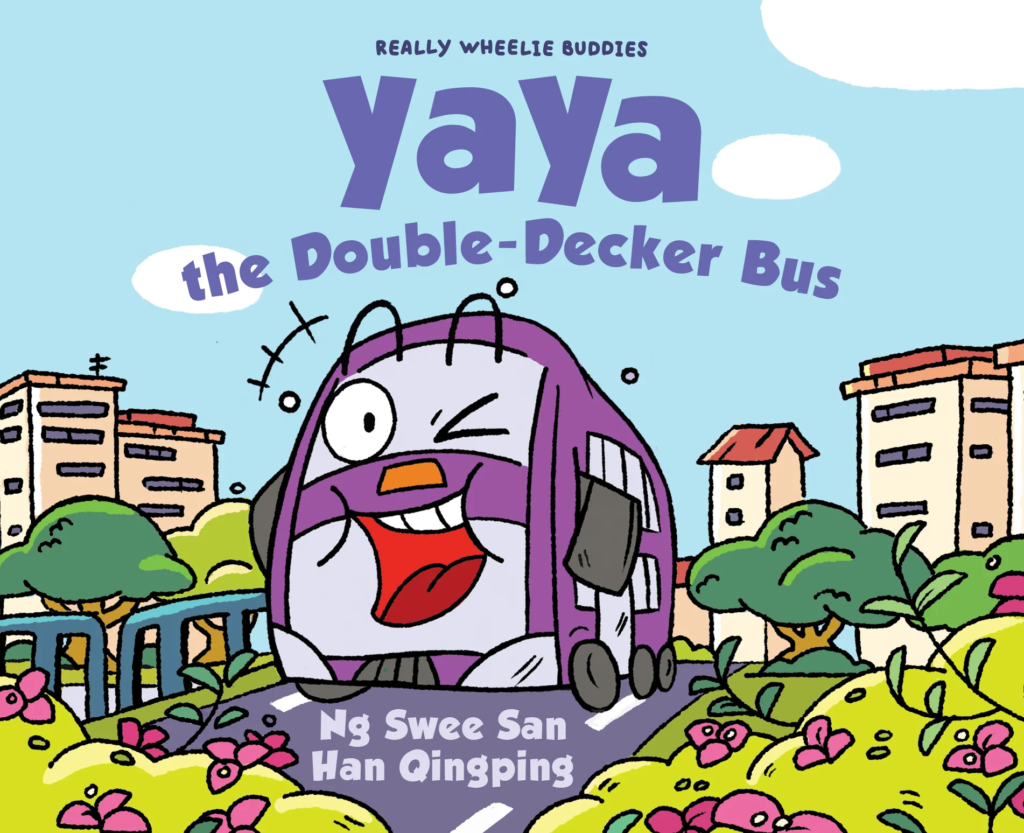
If your child is fascinated by vehicles, Yaya the Double-Decker Bus is a particularly appealing introduction to Singapore children’s literature.
Part of the Really Wheelie Buddies series, the book follows Yaya, a rather boastful double-decker bus who believes he’s better than all the other vehicles on the road.
He’s tall, handsome and fast, and he’s convinced nobody can compare. But when his friend Shorty challenges him, Yaya discovers that being bigger doesn’t necessarily make him better.
What makes this series especially charming is its use of familiar Singaporean expressions. The word yaya, for instance, is a local way of describing someone who is overly proud or arrogant.
Of course, babies aren’t going to understand the finer points of humility. For younger readers, the appeal lies in the illustrations, the recognisable vehicles and the pleasure of hearing a familiar voice read aloud.
As children grow older, the story provides an opportunity to discuss being boastful, treating friends kindly and recognising that everyone has different strengths.
I particularly like the idea of reading this before heading out on a bus ride. There’s something satisfying about a child recognising the same sort of vehicle in real life.
The sturdy board-book format is also a practical advantage for younger children who aren’t always particularly gentle with paper pages.
Format: Board book
Publisher’s recommendation: 6 months and above
2. Chop-Chop the Trishaw by Ng Swee San
Best for: Toddlers who enjoy vehicles, movement and funny character stories.
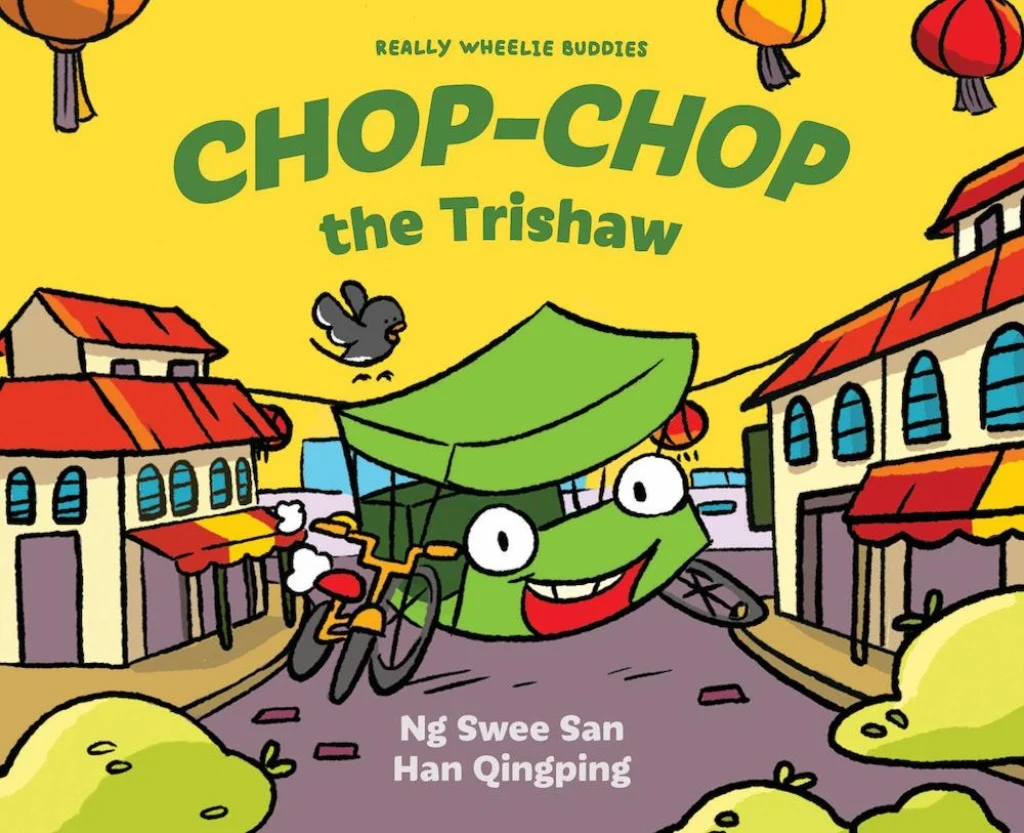
Another title from the Really Wheelie Buddies series, Chop-Chop the Trishaw introduces children to a type of transport they may not encounter as frequently as buses or trains.
Chop-Chop is a trishaw who wishes he could move as quickly as the modern vehicles around him.
Feeling left behind, he decides to become faster, but his attempts to keep up with the others don’t quite go according to plan.
It’s a playful story about accepting your limitations and appreciating your own strengths, although younger children will probably be more interested in the vehicles themselves.
What I find appealing about this series is that it introduces traditional and modern modes of transport without turning the books into history lessons.
A trishaw is something children might occasionally spot in tourist areas or old photographs, but it isn’t part of most toddlers’ everyday experiences in Singapore.
Having a friendly trishaw character provides a natural starting point for conversations about how people travelled in the past.
And, like Yaya the Double-Decker Bus, the book introduces children to a familiar local expression. Chop-chop is a phrase many Singaporean children will eventually hear adults using, particularly when everyone is running late.
For families with transport-obsessed toddlers, this is an enjoyable addition to a vehicle-themed bookshelf.
Format: Board book
Publisher’s recommendation: 6 months and above
3. Afternoon Tea at Raffles Hotel by Fleur Vella-Chang
Best for: Young children who love animals and recognisable Singapore landmarks.
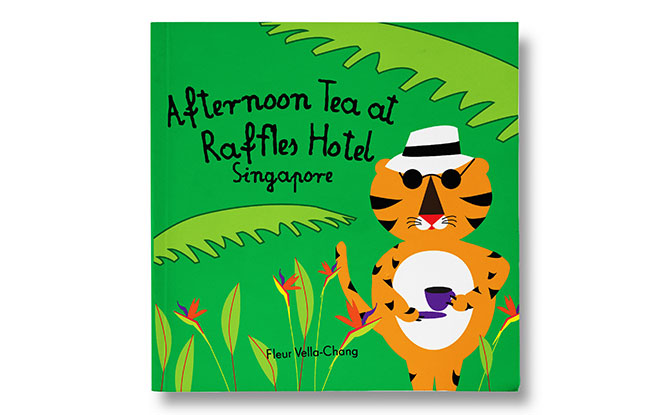
What do the animals at the Singapore Zoo do when they’re not busy entertaining visitors? According to Afternoon Tea at Raffles Hotel, they head out for a rather fancy afternoon tea!
It’s a wonderfully silly premise, bringing together two familiar Singapore attractions in an imaginative little story.
The book features animals from the Singapore Zoo enjoying an outing to Raffles Hotel, introducing young readers to local landmarks through a premise that’s playful rather than educational in the conventional sense.
I think this is one of the strengths of good children’s literature. A book doesn’t need to announce that it’s teaching children about Singapore to introduce them to the places around them.
Sometimes, simply showing a recognisable building or attraction in an entertaining story is enough.
For babies, the animal illustrations can provide opportunities for pointing, naming and making funny animal noises. Older toddlers may enjoy talking about the different animals and imagining what they would order for afternoon tea.
It’s also the sort of book that could make a subsequent visit to Raffles Hotel or the Singapore Zoo more interesting.
The 28-page board-book format makes it a useful option for families with younger children, although the story may become more meaningful as they approach toddlerhood.
Format: Board book
Suggested age: Around 1–3 years
4. Eat With Your Eyes by Low Lai Chow
Best for: Curious toddlers who love food, colours and looking closely at pictures.
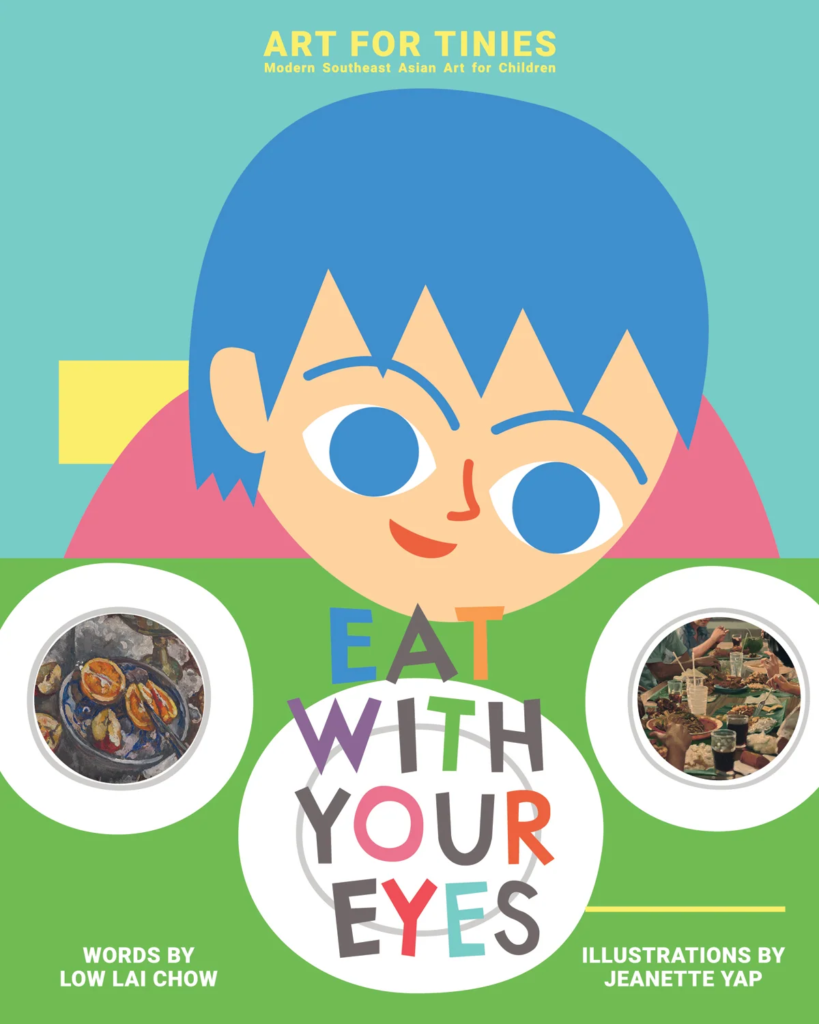
If you’ve ever watched a toddler become completely fascinated by a colourful picture, you’ll understand why a book about art can be surprisingly suitable for very young readers.
Eat With Your Eyes, written by Low Lai Chow and illustrated by Jeanette Yap, is part of National Gallery Singapore’s Art for Tinies series.
Rather than presenting art through complicated explanations, the book introduces young children to 14 modern Southeast Asian artworks through a playful food-inspired theme.
It’s an interesting approach because food is such a familiar starting point for toddlers.
Even children who aren’t yet able to follow a full story can respond to pictures by pointing, identifying colours or describing what an object reminds them of.
What I appreciate about this concept is that it encourages children to look at art without worrying about finding the correct interpretation.
You can ask your toddler what they see, whether something looks delicious or which colours they like best. Their answers may have very little to do with what the artist originally intended, but that isn’t necessarily a bad thing.
For children growing up in Singapore, it’s also a gentle introduction to the idea that art and creativity exist beyond the usual drawing and colouring activities.
At 36 pages, this is slightly longer than some traditional baby board books, so I would treat it as something to explore together rather than expecting a younger toddler to sit through every page.
Format: Board book
Suggested age: Around 2–3 years, with adult guidance
5. Candy Makes New Friends by Bessie Chua and Linda Yan
Best for: Toddlers who enjoy lift-the-flap books and discovering hidden animals.
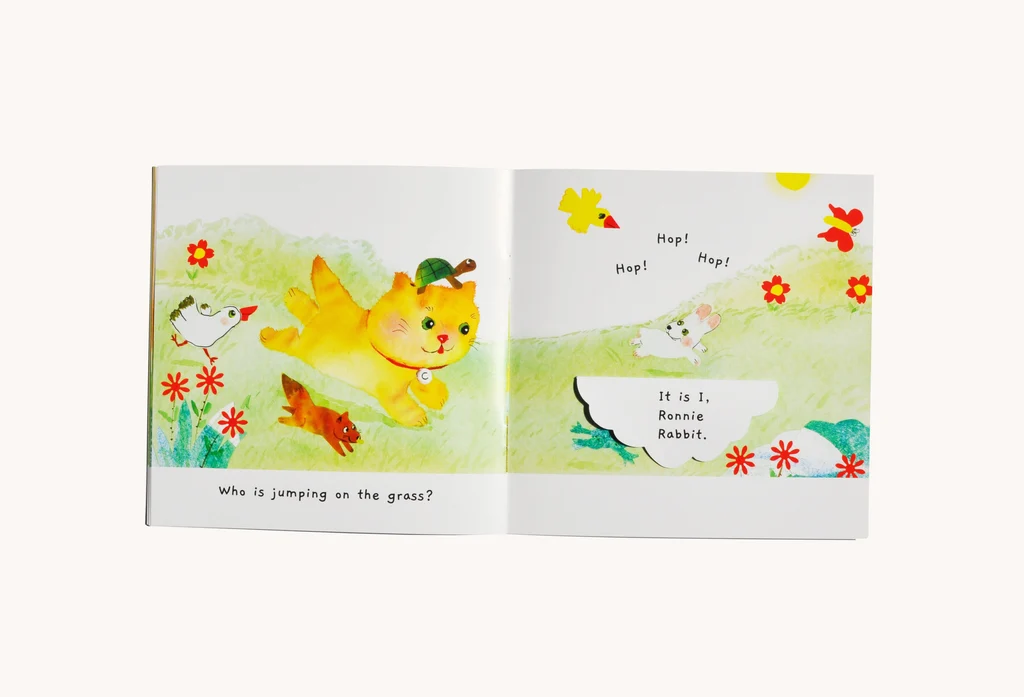
There’s a reason lift-the-flap books are so popular with toddlers.
Even a child who has absolutely no interest in sitting still for a story may suddenly become quite enthusiastic when there’s something to open, lift or discover.
Candy Makes New Friends, written by Bessie Chua and Linda Yan and illustrated by Patrick Yee, follows Candy as she explores the outdoors and encounters different animals.
As children turn the pages, they can lift flaps to discover the creatures hiding within the illustrations.
The interactive format makes it particularly suitable for toddlers who prefer doing something with a book rather than simply listening.
It also creates plenty of opportunities for conversation. You can ask your child what might be hiding behind a flap, make animal noises together or point out the different things Candy discovers.
Although this isn’t specifically a book about Singapore landmarks or local food, its Singaporean creators make it a worthwhile addition to a collection of homegrown children’s literature.
The illustrations by Patrick Yee are another attraction, particularly for families interested in discovering more Singaporean illustrators.
I would choose this for a child who already enjoys books such as Dear Zoo or Where’s Spot? and is ready for another interactive story.
Format: Hardcover picture book with flaps
Suggested age: Around 2–3 years, with supervision
6. I Want to Play House by Low Lai Chow
Best for: Older toddlers who enjoy pretend play and talking about their homes.
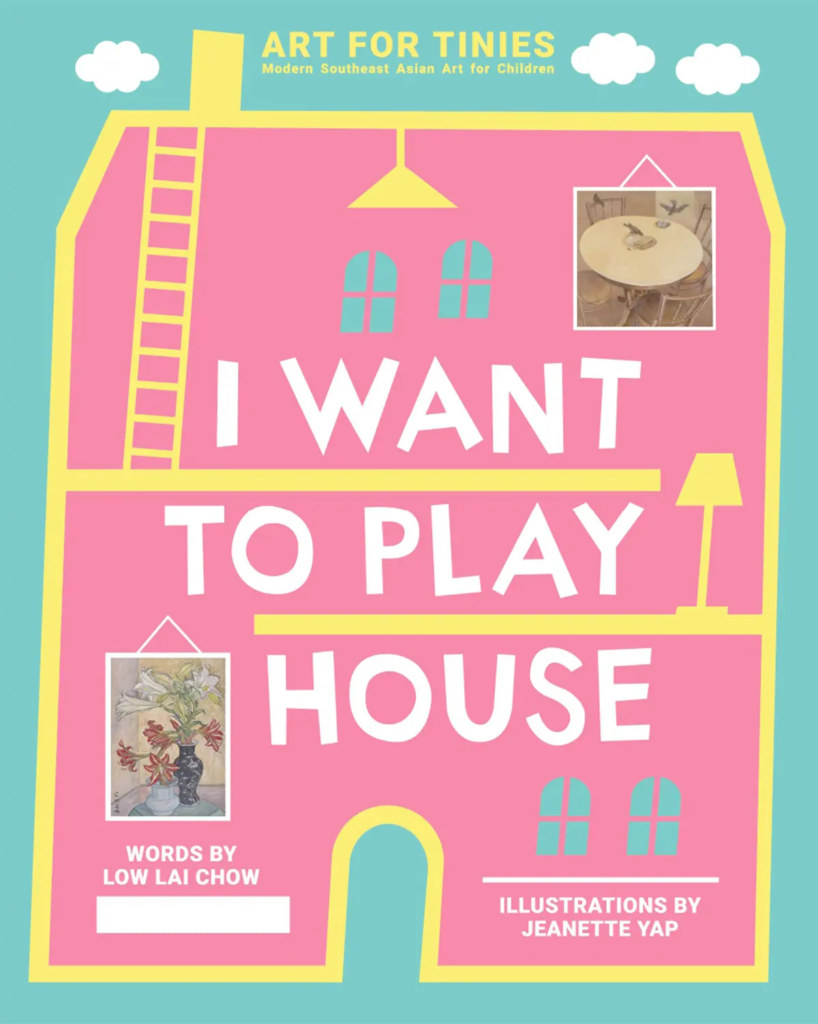
What makes a house feel like home?
It’s a surprisingly interesting question for a children’s book, particularly when you consider how much time toddlers spend exploring and understanding the spaces around them.
Another title from National Gallery Singapore’s Art for Tinies series, I Want to Play House uses 14 Southeast Asian artworks to explore the idea of home.
Written by Low Lai Chow and illustrated by Jeanette Yap, the book encourages children to look at different representations of homes and imagine what their own ideal home might look like.
This is particularly relevant to young children, whose understanding of the world often begins with the familiar spaces they encounter every day.
Their bedroom, the living room, the kitchen and the playground downstairs may form the centre of their universe.
The book provides a natural opportunity to talk about those places, identify household objects and encourage imaginative play.
I also like that it doesn’t depend on children knowing anything about art. Parents can simply use the pictures as conversation starters.
National Gallery Singapore recommends this title for ages three to six. Younger toddlers may still enjoy looking at selected illustrations with an adult, but I wouldn’t necessarily expect them to appreciate the full concept just yet.
Format: Board book
Publisher’s recommendation: 3–6 years
7. Timmy and Tammy on the MRT by Ruth Wan-Lau
Best for: Toddlers who love trains and everyday Singapore adventures.
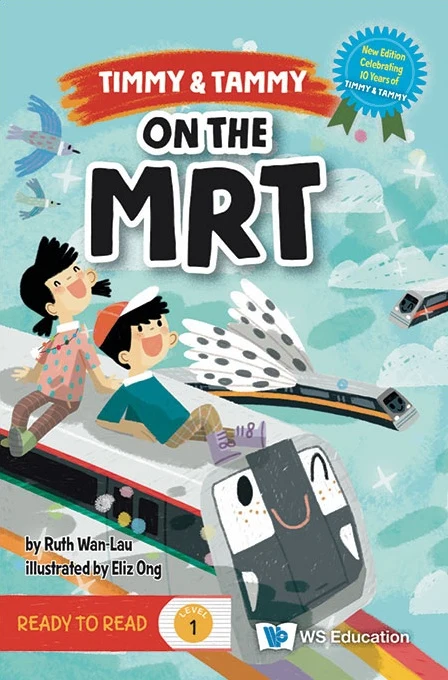
Taking the MRT might seem like a completely ordinary experience to adults, but for a toddler, it can be quite an adventure.
There are trains arriving at platforms, doors opening and closing, people getting on and off, and stations with different names and colours.
Timmy and Tammy on the MRT is part of Ruth Wan-Lau’s Singapore-based children’s series, which follows two young characters as they explore familiar places and experiences.
The Level 1 books use short sentences and controlled vocabulary, making them accessible to younger children while also supporting early reading skills as they grow.
What makes this particular title appealing is how closely it connects to everyday life.
Many Singaporean toddlers will have taken the MRT with their parents, whether to visit relatives, go shopping or simply travel around the island.
Being able to recognise a familiar experience in a story can make a book more engaging, especially for children who aren’t yet interested in elaborate fictional adventures.
I would use this book to talk about what happens during an MRT journey, from waiting on the platform to finding a seat and listening for station announcements.
You could even bring it along on a train ride and encourage your child to spot things they recognise from the illustrations.
The series is officially designed for preschoolers, so it may be better suited to older toddlers approaching three than to babies.
Format: Paperback picture book
Suggested age: Around 2½–4 years for shared reading
8. Catch Mee If You Can: Find the Noodles, Eat the Noodles! by Low Lai Chow
Best for: Food-loving toddlers and families who enjoy playful language.
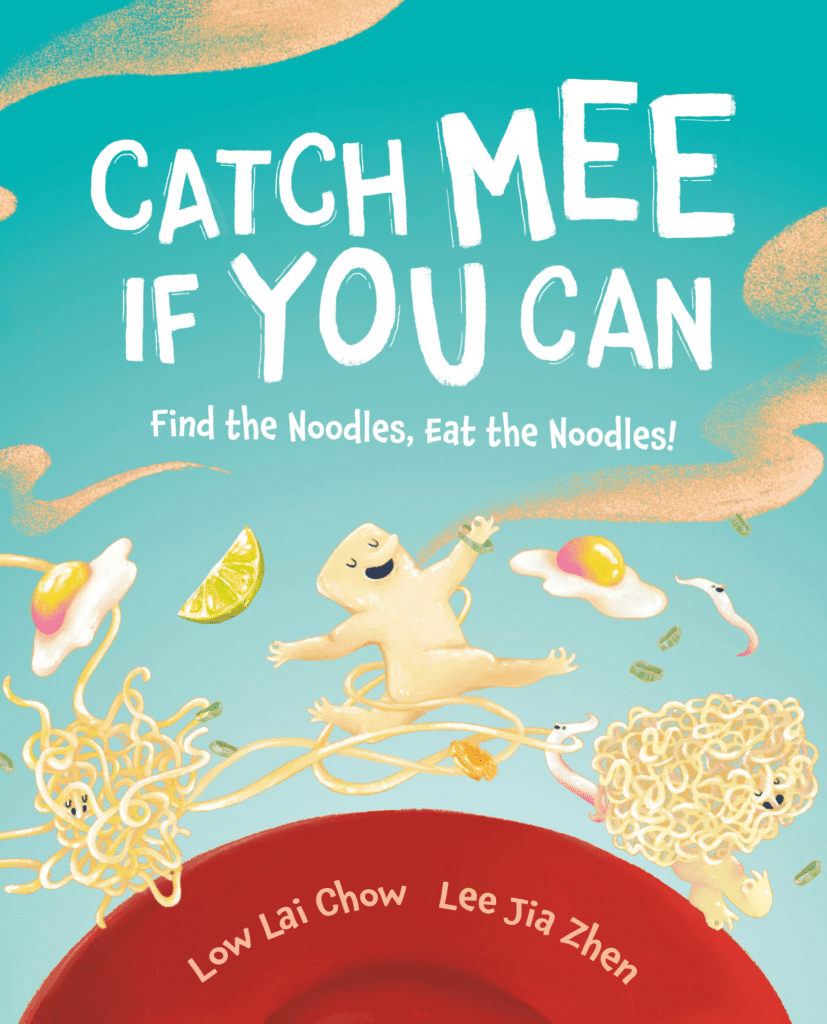
Singapore is a wonderful place to raise a child who loves food, and it’s only fitting that local cuisine should feature in children’s literature too.
Catch Mee If You Can: Find the Noodles, Eat the Noodles! celebrates Singapore’s many noodle dishes through playful language and imaginative illustrations.
Written by Low Lai Chow and illustrated by Lee Jia Zhen, the book introduces children to different kinds of noodles, including mee hoon kueh and mee sua.
There are noodles in soup, noodles that are dry and noodles imagined in wonderfully unexpected ways.
The appeal here is partly linguistic. The title itself plays on the word mee, while the rhythmic writing invites expressive reading aloud.
For younger children, it’s an opportunity to identify foods they may already know. Older toddlers may enjoy recognising their favourite noodles or discovering that the same basic ingredient can appear in so many different dishes.
I particularly like the idea of connecting a book like this to an actual meal.
Reading about noodles before heading to the hawker centre, for instance, gives children a chance to make connections between words, illustrations and the food in front of them.
That said, this is a 32-page paperback picture book rather than a sturdy baby board book. It’s best saved for toddlers who are becoming more comfortable handling paper pages or enjoying longer stories.
Format: Paperback picture book
Suggested age: Around 3 years and above
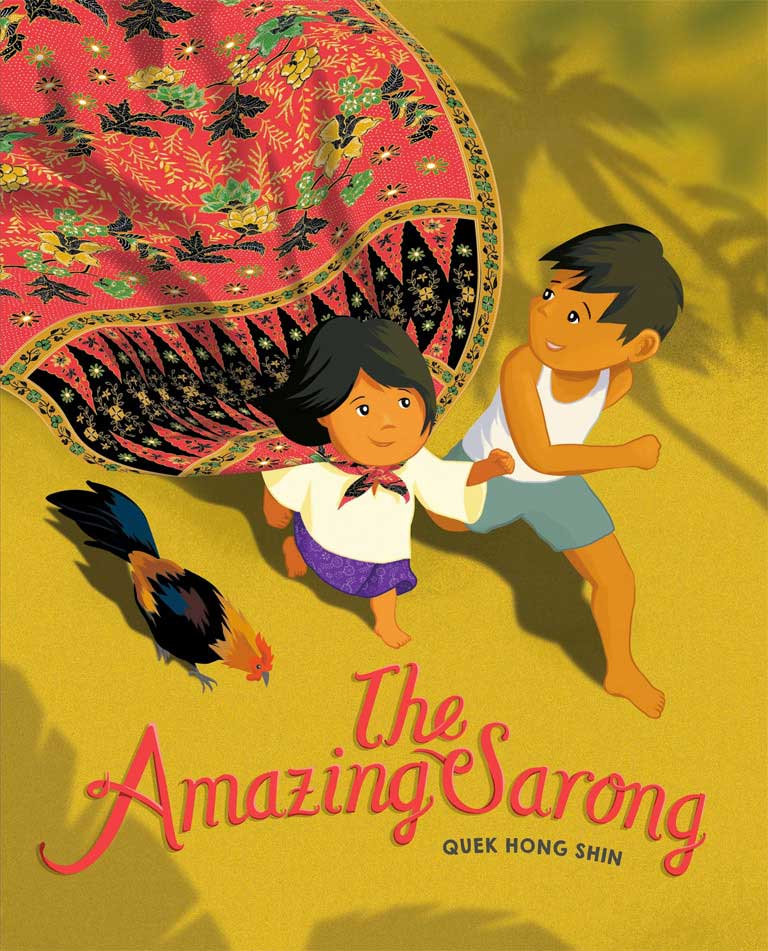
9. The Amazing Sarong by Quek Hong Shin
Best for: Older toddlers who enjoy imaginative play and stories about everyday objects.
One of the things I find fascinating about young children is how little they need to entertain themselves.
An ordinary cardboard box can become a house, a vehicle or a hiding place. A blanket can turn into a tent, a cape or an elaborate costume.
The Amazing Sarong by Quek Hong Shin celebrates precisely this sort of imagination.
The story follows Nora and Adi, two children preparing for a trip to the beach. When their mother hands them a sarong, they discover that this seemingly ordinary piece of cloth can become the starting point for all sorts of adventures.
It’s a charming premise that introduces children to an item familiar in many Southeast Asian households without turning the story into a formal lesson about cultural heritage.
The sarong becomes interesting because of what the children do with it, rather than simply because of its cultural significance.
I think that’s an especially effective approach for young readers. Children are more likely to develop an appreciation for familiar traditions when they’re presented through play, humour and everyday experiences.
The book also offers a natural opportunity for an activity after reading.
You could bring out a sarong or another suitable piece of fabric and let your child explore different ways to use it during supervised pretend play.
Woods in the Books recommends this title for ages three to seven, so it’s better suited to older toddlers and preschoolers than very young babies.
Format: Paperback picture book
Recommended age: 3–7 years
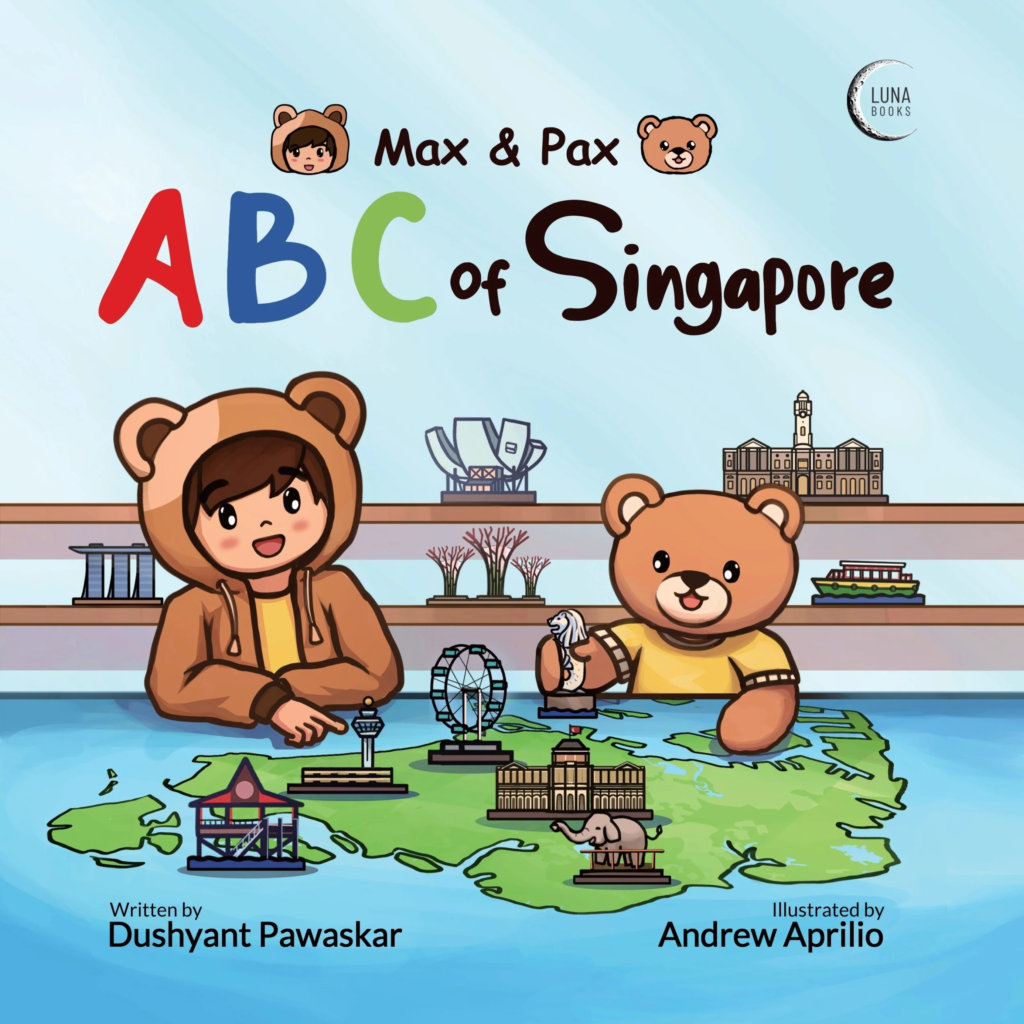
10. Max & Pax: ABC of Singapore
Best for: Older toddlers learning letters and recognising familiar Singapore landmarks.
Alphabet books are everywhere, but there’s something appealing about an ABC book that introduces children to places they can actually visit.
Max & Pax: ABC of Singapore takes young readers through the alphabet using local landmarks, attractions and familiar elements of Singapore life.
Instead of relying entirely on generic examples, it features places such as the ArtScience Museum, Merlion and Sentosa.
Each letter is accompanied by illustrations and rhyming text, making the book suitable for reading aloud while giving children opportunities to recognise sounds and associate letters with familiar objects or places.
What I particularly appreciate about the idea is how easily it extends beyond reading time.
A child who has seen the Merlion in a book may be particularly excited to recognise it during a family outing. Likewise, visiting a place first and then finding it in a book can make the reading experience more meaningful.
For younger toddlers, I wouldn’t worry too much about teaching the alphabet in sequence. Simply pointing out familiar landmarks and talking about the pictures can be enjoyable.
The book’s creators recommend it for ages three to eight, so it’s best regarded as something older toddlers can grow into rather than a first alphabet book for babies.
Format: Hardcover picture book
Publisher’s recommendation: 3–8 years
Which Singapore Children’s Books Should You Buy for Different Ages?
Choosing books for babies and toddlers can be surprisingly difficult, especially when an age recommendation doesn’t necessarily reflect how an individual child interacts with books.
Here’s how I would approach it.
Best Singapore Books for Babies Under 12 Months
At this stage, I would prioritise sturdy books with clear illustrations that you can talk about rather than expecting your baby to follow a complete story.
Yaya the Double-Decker Bus and Chop-Chop the Trishaw are both suitable starting points, with publishers recommending them from six months onwards.
The most important thing is the interaction itself. You can point to the vehicles, make sounds, talk about colours and allow your baby to explore the book safely.
Best Singapore Books for One-Year-Olds
Many one-year-olds enjoy recognising familiar objects, particularly vehicles and animals.
Afternoon Tea at Raffles Hotel is an appealing option for children who enjoy animal pictures, while the Really Wheelie Buddies series continues to work well for little ones interested in transport.
You don’t need to read every word or finish every page. Sometimes, naming the same animal or vehicle five times is exactly what your child wants.
Best Singapore Books for Two-Year-Olds
At two, many toddlers become more interested in interactive books, recognisable experiences and simple stories.
Candy Makes New Friends is worth exploring for its flaps, while Eat With Your Eyes offers opportunities to talk about colours, pictures and familiar objects.
Older two-year-olds may also enjoy Timmy and Tammy on the MRT, particularly if they already have experience taking public transport.
Best Singapore Books for Three-Year-Olds
This is when many children begin enjoying slightly longer stories and more complex ideas.
The Amazing Sarong, Catch Mee If You Can, I Want to Play House and Max & Pax: ABC of Singapore become especially appealing choices.
Children at this age may also enjoy discussing what happens in a story, asking questions about the illustrations and connecting the characters’ experiences to their own lives.
Why Singapore-Themed Books Are Worth Including in Your Child’s Library
International children’s books are wonderful, and there’s no reason to replace them with an entirely local bookshelf.
But I do think Singapore-themed books offer something different.
For one, they help children recognise their own surroundings.
A toddler might not understand what makes Singapore culturally unique, but they can certainly recognise a bus, an MRT train, a familiar meal or a place they’ve visited with their parents.
These small connections can make books feel more relevant to their everyday experiences.
Local books can also introduce children to Singapore’s languages and cultural traditions in a gentle, age-appropriate way.
Instead of explicitly teaching children about multiculturalism or heritage, stories can simply reflect the diversity of people, food and experiences that make up everyday life here.
I also think there’s value in supporting Singaporean writers and illustrators.
Children’s publishing can be a difficult field, particularly in a relatively small market. Choosing local books helps encourage the creation of stories that reflect the experiences of children growing up here.
And selfishly, I quite enjoy books that offer a little nostalgia for parents too.
Sometimes, an illustration of a trishaw or a familiar local dish becomes a conversation about what Singapore was like when we were younger, even if our children aren’t quite ready to appreciate those stories yet.
How to Make Reading Singapore Books More Fun for Toddlers
One of the easiest ways to engage young children is to connect books to things they can experience.
If you’re reading Yaya the Double-Decker Bus, point out buses when you’re out together. If your toddler enjoys Catch Mee If You Can, talk about the noodles they see at a hawker centre.
For books featuring landmarks, consider revisiting the story after a family outing. Children may enjoy recognising something they’ve seen in person, particularly if you have photographs from the visit.
You can also adapt the reading experience to suit your child’s attention span.
There’s no rule that says you must read every word. Babies may prefer listening to your voice and looking at illustrations, while older toddlers might want to spend several minutes discussing a single page.
Some children will insist on reading the same book repeatedly, occasionally to the point where you can recite the entire story from memory.
As repetitive as that can feel for parents, there’s nothing wrong with allowing children to revisit their favourites.
After all, reading at this age should be enjoyable rather than another task to complete.
Where to Buy or Borrow Singapore Children’s Books
Singapore has several good places to discover locally published children’s books.
Epigram Bookshop carries a wide range of Singaporean titles, including the Really Wheelie Buddies series and other locally published picture books.
Woods in the Books is an independent children’s bookshop that specialises in illustrated books and stocks Singaporean picture books alongside international titles.
National Gallery Singapore’s Gallery Store is worth exploring for books that introduce young children to art, particularly its Art for Tinies series.
The National Library Board is another excellent starting point, especially if you’re unsure whether a particular title will appeal to your child.
Borrowing books before buying them can be particularly useful at the toddler stage, when interests sometimes change dramatically from one week to the next.
A book that looks beautiful to an adult may hold absolutely no appeal for your child, while an inexpensive little board book about vehicles might become their most treasured possession.
Frequently Asked Questions
What are the best Singapore children’s books for babies?
Yaya the Double-Decker Bus and Chop-Chop the Trishaw by Ng Swee San are good options for babies, with the publisher recommending them from six months onwards. Their sturdy board-book pages and colourful vehicle illustrations make them suitable for early shared reading.
Are there Singapore-themed board books for toddlers?
Yes. The Really Wheelie Buddies series features familiar Singapore vehicles and local expressions, while Afternoon Tea at Raffles Hotel introduces landmarks through an imaginative animal story. National Gallery Singapore’s Art for Tinies books also come in board-book formats.
What are the best Singapore books for two-year-olds?
For two-year-olds, consider Candy Makes New Friends, Eat With Your Eyes and Afternoon Tea at Raffles Hotel. These offer illustrations and opportunities for interaction without requiring children to follow a long, complicated storyline.
What are the best Singapore books for three-year-olds?
The Amazing Sarong, Catch Mee If You Can, Timmy and Tammy on the MRT and Max & Pax: ABC of Singapore are appealing choices for three-year-olds. They introduce familiar experiences and aspects of Singapore culture through imaginative stories and illustrations.
Are there children’s books about Singapore food?
Yes. Catch Mee If You Can: Find the Noodles, Eat the Noodles! by Low Lai Chow introduces children to different noodle dishes found in Singapore. There are also picture books exploring other local foods, although some are better suited to preschoolers and older children.
Can babies benefit from books about Singapore even if they don’t understand the stories?
Absolutely. Babies do not need to understand a book’s cultural references to enjoy looking at pictures, hearing language and spending time reading with a caregiver. The local details become more meaningful as children grow and begin recognising familiar objects and experiences.
Should I choose board books or picture books for my toddler?
For babies and younger toddlers, board books are generally more practical because their thick pages are easier to handle and less likely to tear. Older toddlers who are learning to turn pages carefully may enjoy traditional picture books, especially when reading with an adult.
Where can I borrow Singapore children’s books for free?
The National Library Board’s public libraries are a good place to start. Search the NLB catalogue by book title or author, and check the availability of physical copies at your preferred branch. Availability varies between libraries.
Final Thoughts
I love the idea of children growing up with stories that reflect the places, people and experiences around them. There’s something rather special about a toddler recognising an MRT train in a book, pointing excitedly at a familiar animal or discovering that the noodles they eat for lunch can appear in a story too.
Of course, these little moments probably mean more to us as parents than they do to our children at first. A one-year-old is unlikely to appreciate the cultural significance of a trishaw, and a two-year-old certainly doesn’t need a lesson on Singapore’s heritage every time they open a picture book.
But that’s precisely why I appreciate children’s books that introduce local culture through ordinary, enjoyable experiences rather than trying too hard to be educational.
The best books for babies and toddlers are often the ones they want to return to again and again, whether that’s because of a funny character, an interesting picture or simply the pleasure of reading together. And if those books also help them recognise a little more of the Singapore they’re growing up in, that’s a wonderful bonus.
Leave a Reply