There are days when the last thing you want to read is another emotionally exhausting novel. Perhaps you’ve just finished a particularly disturbing thriller, or you’re simply tired after a long week and want something that doesn’t demand too much of you. Something gentle, preferably involving a bookshop, a quiet neighbourhood café or a handful of strangers whose lives become a little better after meeting one another.
This is where Korean healing fiction comes in.
Over the past few years, Korean novels about everyday life, emotional recovery and unexpected human connections have found an enthusiastic international readership. Books such as Welcome to the Hyunam-dong Bookshop and The Dallergut Dream Department Store have introduced readers to stories where the stakes are often deeply personal rather than dramatic, and where the greatest achievement might simply be finding the courage to begin again.
What I find particularly appealing about this genre is that the characters aren’t necessarily looking for extraordinary lives. Many are exhausted by work, disappointed by relationships or struggling with the feeling that they’ve somehow fallen behind everyone else. Rather than offering grand solutions, these novels often suggest that happiness can be found in smaller, more manageable changes.
If you’re looking for your next comforting read, here are ten Korean healing fiction books available in English translation, from realistic stories about burnout and friendship to whimsical tales involving magical laundries and department stores that sell dreams.
What Is Korean Healing Fiction?
Korean healing fiction, sometimes called healing novels or healing literature, is a broad category of contemporary fiction that focuses on emotional recovery, personal growth and the comfort of human connection.
These books often feature characters experiencing burnout, loneliness, grief or uncertainty about their futures. Rather than relying on dramatic plot twists, the stories follow their gradual transformation through friendship, meaningful work, creativity or simply finding a place where they feel welcome.
Many are set in familiar communal spaces: bookshops, convenience stores, laundromats, pottery workshops and cafés. Others introduce magical elements, such as the ability to purchase dreams or remove painful memories.
Not every healing novel is entirely cheerful. Some deal with quite serious emotional difficulties, but the overall tone tends to be hopeful, with an emphasis on understanding, acceptance and second chances.
The Best Korean Healing Fiction Books at a Glance
| Book | Author | Best for |
|---|---|---|
| Welcome to the Hyunam-dong Bookshop | Hwang Bo-reum | Burnout and starting over |
| The Second Chance Convenience Store | Kim Ho-yeon | Kindness and community |
| The Healing Season of Pottery | Yeon Somin | Slowing down and rediscovering yourself |
| Yeonnam-dong’s Smiley Laundromat | Kim Jiyun | Interconnected neighbourhood stories |
| The Dallergut Dream Department Store | Miye Lee | Whimsical fantasy and escapism |
| Marigold Mind Laundry | Jungeun Yun | Regret, forgiveness and letting go |
| The Rainfall Market | You Yeong-Gwang | Magical adventures and finding happiness |
| Soyangri Book Kitchen | Kim Jee Hye | Books, food and peaceful retreats |
| Hakuda Photo Studio | Her Taeyeon | Fresh starts and found family |
| Return to the Dallergut Dream Department Store | Miye Lee | More cosy fantasy after the first book |
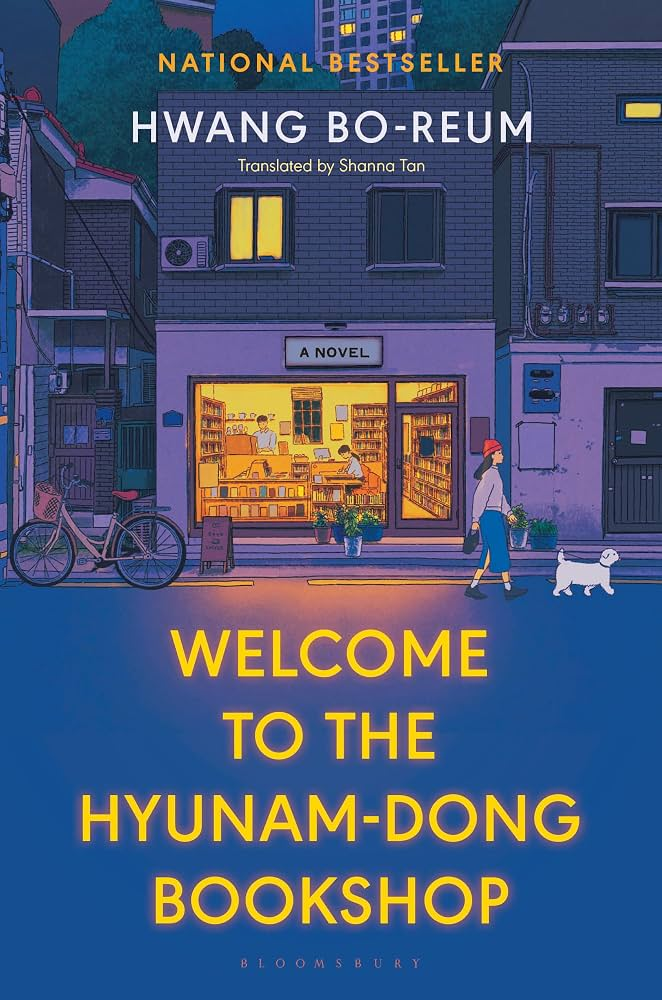
1. Welcome to the Hyunam-dong Bookshop by Hwang Bo-reum
Best for: Readers who are exhausted by work and wondering whether it’s too late to start over.
If there’s one book that perfectly captures the appeal of Korean healing fiction, it’s Welcome to the Hyunam-dong Bookshop, translated into English by Shanna Tan.
The novel follows Yeongju, a woman who has spent much of her life doing what society expects of her. She studies hard, pursues a respectable career and gets married, only to discover that ticking all the right boxes hasn’t made her particularly happy.
Burned out and disillusioned, she leaves her previous life behind and opens a small bookshop in a Seoul neighbourhood.
What follows is a gentle exploration of work, friendship and the search for meaning, as the bookshop gradually becomes a refuge for people struggling with their own disappointments.
What makes this novel stand out is its understanding of modern exhaustion. Yeongju’s predicament will feel familiar to anyone who has spent years working towards a particular version of success, only to realise that it isn’t necessarily what they want anymore.
There’s also something reassuring about a story that doesn’t suggest everyone needs to achieve something extraordinary. Sometimes, finding a sustainable routine, enjoying meaningful conversations and spending time doing something you love can be enough.
The pacing is deliberately unhurried, and readers expecting major twists may find it slow. But for those who enjoy introspective, character-driven fiction, this is an excellent introduction to the genre.
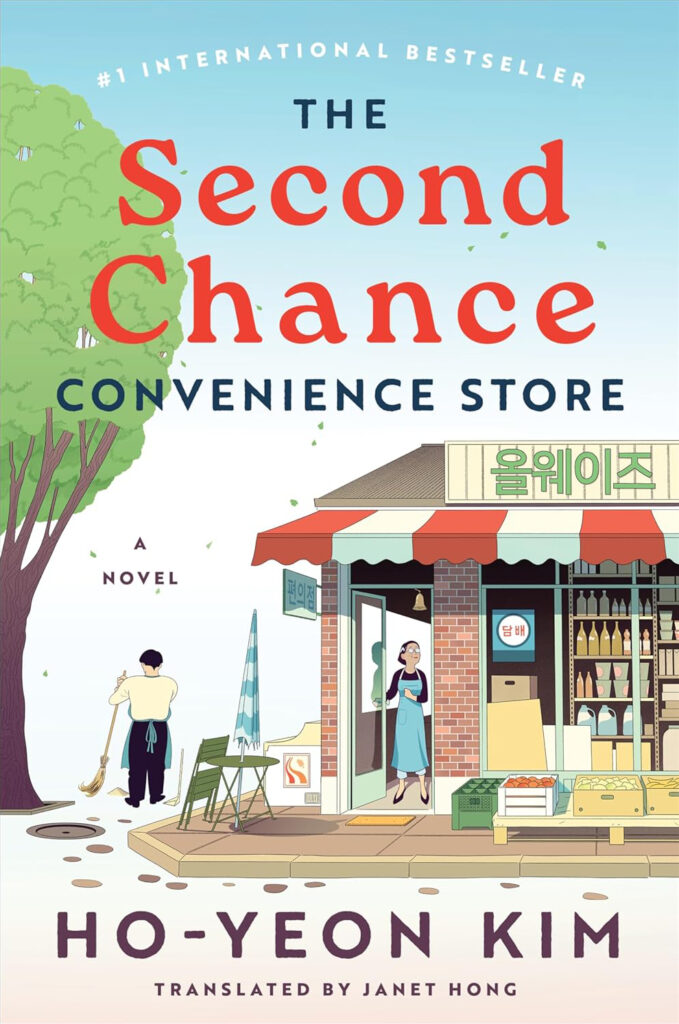
2. The Second Chance Convenience Store by Kim Ho-yeon
Best for: Readers who enjoy stories about unlikely friendships and everyday acts of kindness.
Translated by Janet Hong, The Second Chance Convenience Store takes place in an ordinary Seoul convenience store, a setting that might not initially sound particularly promising for an uplifting novel.
The story begins when Dokgo, a homeless man living near Seoul Station who has lost much of his memory, finds a woman’s wallet and decides to return it.
The grateful owner, Mrs. Yeom, runs a struggling neighbourhood convenience store. After getting to know Dokgo, she offers him food and eventually a job.
As he settles into his new role, Dokgo begins forming connections with the people who visit the store, many of whom are carrying problems of their own.
What makes this premise appealing is its refusal to treat kindness as something that requires wealth, influence or extraordinary circumstances. A meal, a job opportunity or simply taking the time to listen to another person can have a meaningful impact.
The convenience store itself becomes a meeting point for people who might otherwise have little reason to interact, and the novel explores how those encounters gradually change their lives.
There is more emotional weight here than the cheerful premise might suggest, particularly around homelessness, addiction and personal regret. Still, its central message about dignity and second chances makes it a strong choice for readers looking for hopeful fiction with some substance.
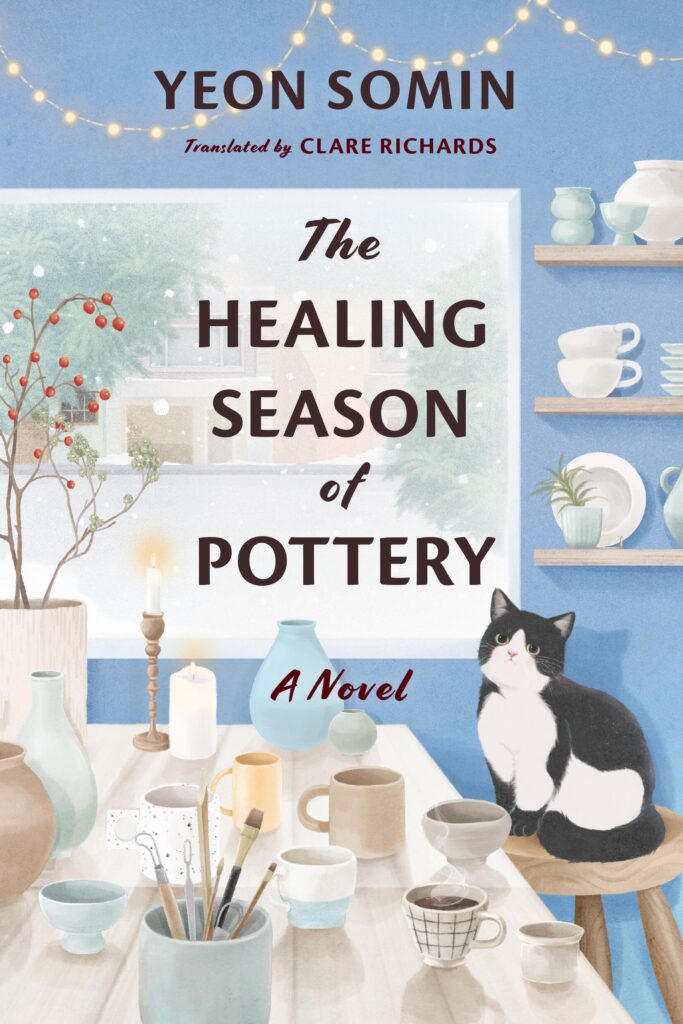
3. The Healing Season of Pottery by Yeon Somin
Best for: Readers who want a quiet novel about burnout, creativity and finding peace in ordinary routines.
There’s something particularly appealing about books that encourage us to slow down, especially when so much of everyday life seems designed to make us move faster.
In The Healing Season of Pottery, translated by Clare Richards, Jungmin has reached a breaking point. Exhausted by her demanding career as a television writer, she quits her job and retreats from the world.
After months of isolation, she eventually ventures outside and discovers a pottery workshop called Soyo.
What begins as a tentative attempt to occupy her time gradually becomes something more meaningful. Through the repetitive, tactile process of working with clay, Jungmin begins reconnecting with herself and the people around her.
The pottery workshop is an especially effective setting for this kind of story. Unlike the professional world Jungmin has left behind, pottery isn’t something that can necessarily be rushed or perfected through sheer determination.
Clay requires patience. Mistakes happen, pieces collapse and sometimes the process matters more than the finished product.
Readers who enjoy novels about personal reinvention will probably appreciate the book’s emphasis on finding satisfaction in activities that don’t need to become productive or profitable.
It’s also a good choice for anyone interested in stories where friendship and community develop gradually, without requiring dramatic revelations or grand romantic gestures.
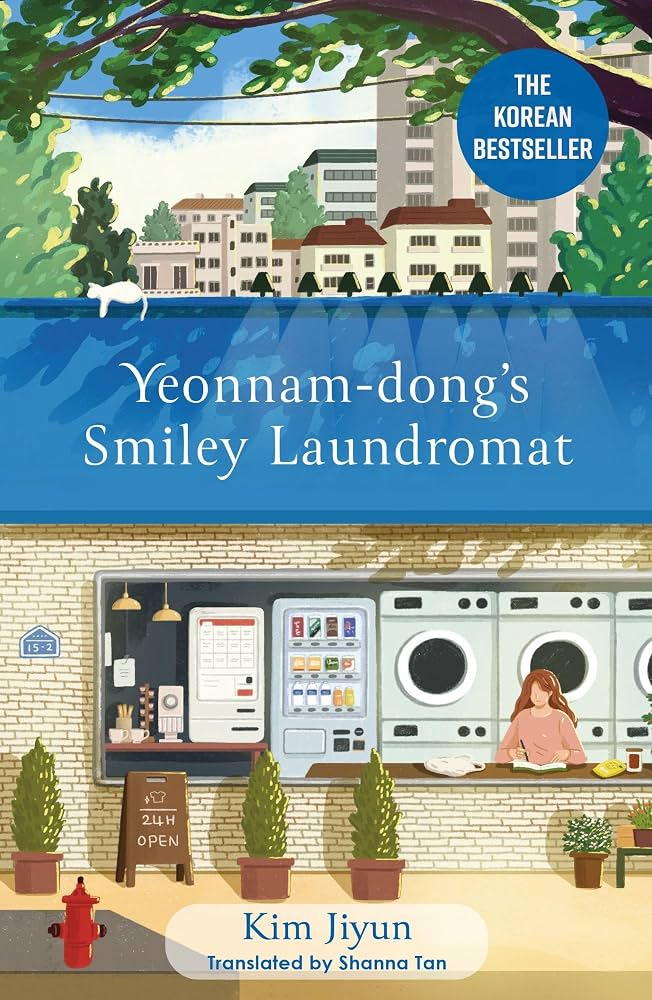
4. Yeonnam-dong’s Smiley Laundromat by Kim Jiyun
Best for: Readers who enjoy interconnected stories about ordinary people whose lives unexpectedly overlap.
A neighbourhood laundromat might seem like an unlikely place for strangers to share their deepest worries, but that’s precisely what happens in Kim Jiyun’s Yeonnam-dong’s Smiley Laundromat, translated by Shanna Tan.
Set in a rapidly changing Seoul neighbourhood, the novel revolves around a laundromat that has become a peaceful refuge for local residents.
When someone leaves a notebook behind, customers begin writing messages inside it. What starts as a small curiosity gradually becomes an opportunity for people to express feelings they might otherwise keep to themselves.
The notebook creates unexpected connections between strangers, bringing together people who have been living alongside one another without truly knowing each other.
What makes the concept interesting is how it uses such an ordinary setting to explore loneliness and community.
Cities can be strange places. You might see the same neighbours for years without knowing anything about their lives, and even crowded neighbourhoods can feel isolating.
The laundromat offers an alternative to that anonymity, creating a shared space where people can acknowledge one another’s experiences.
The novel also introduces a gentle mystery surrounding the notebook, giving readers a narrative thread to follow alongside the individual stories.
If you enjoy ensemble casts and stories about the quiet kindness of strangers, this is one worth considering.
5. The Dallergut Dream Department Store by Miye Lee
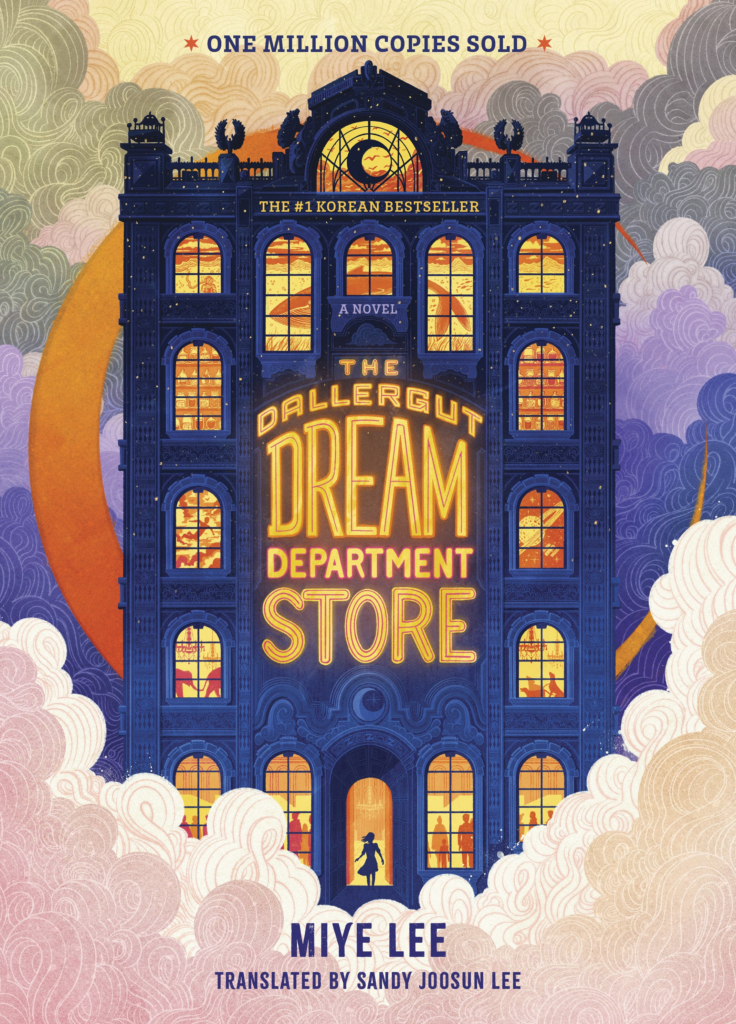
Best for: Readers who want something magical, imaginative and comforting without a complicated fantasy world.
If realistic stories about burnout and neighbourhood friendships aren’t quite what you’re looking for, The Dallergut Dream Department Store offers something rather different.
Translated by Sandy Joosun Lee, the novel takes place in a mysterious town that people visit while sleeping. At its centre is a department store where customers can purchase dreams.
Different floors specialise in different experiences, from childhood memories and fantastical adventures to dreams about people who are no longer alive.
The story follows Penny, an enthusiastic new employee who begins learning about the peculiar business of selling dreams.
The premise allows Miye Lee to explore familiar human emotions through a delightfully imaginative setting. Dreams become a way of examining people’s desires, regrets, ambitions and the experiences they wish they could have.
One of the pleasures of this kind of fiction is discovering how the fictional world works. The department store has its own rules, employees and customers, but the world-building remains accessible rather than overwhelming.
It’s a good choice for readers who enjoy magical realism and cosy fantasy, particularly those who prefer imaginative ideas over elaborate battles or complicated political conflicts.
Although the novel contains emotional moments, its whimsical setting gives it a lighter overall atmosphere than some of the more realistic books on this list.
6. Marigold Mind Laundry by Jungeun Yun
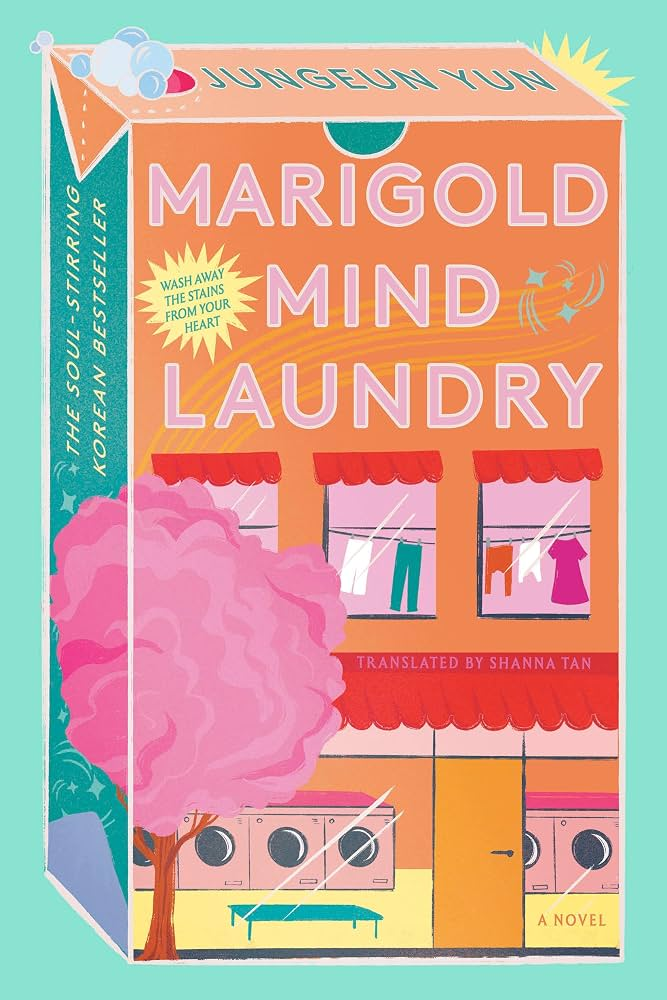
Best for: Readers who enjoy magical stories about regret, forgiveness and emotional healing.
Most of us have memories we would rather forget. An embarrassing mistake, a painful breakup or something we said years ago that still makes us uncomfortable whenever it comes to mind.
But what if those memories could actually be washed away?
That’s the central premise of Marigold Mind Laundry, translated by Shanna Tan.
The novel follows Jieun, a woman with extraordinary abilities who establishes a magical laundry where visitors can cleanse themselves of painful memories and emotional burdens.
Her customers arrive carrying different forms of regret, from difficult relationships to experiences that have affected the way they see themselves.
As Jieun helps them confront their pasts, the novel raises questions about whether forgetting painful experiences is necessarily the same as healing from them.
It’s a particularly interesting concept because regret isn’t always entirely negative. Our most difficult memories can shape our choices, relationships and understanding of other people.
Would removing those experiences make us happier, or would we lose something important about ourselves?
The novel’s whimsical setting makes these questions approachable, although some of the characters’ experiences are emotionally heavy.
Readers who appreciate gently philosophical fiction with magical elements may find this one especially appealing.
7. The Rainfall Market by You Yeong-Gwang
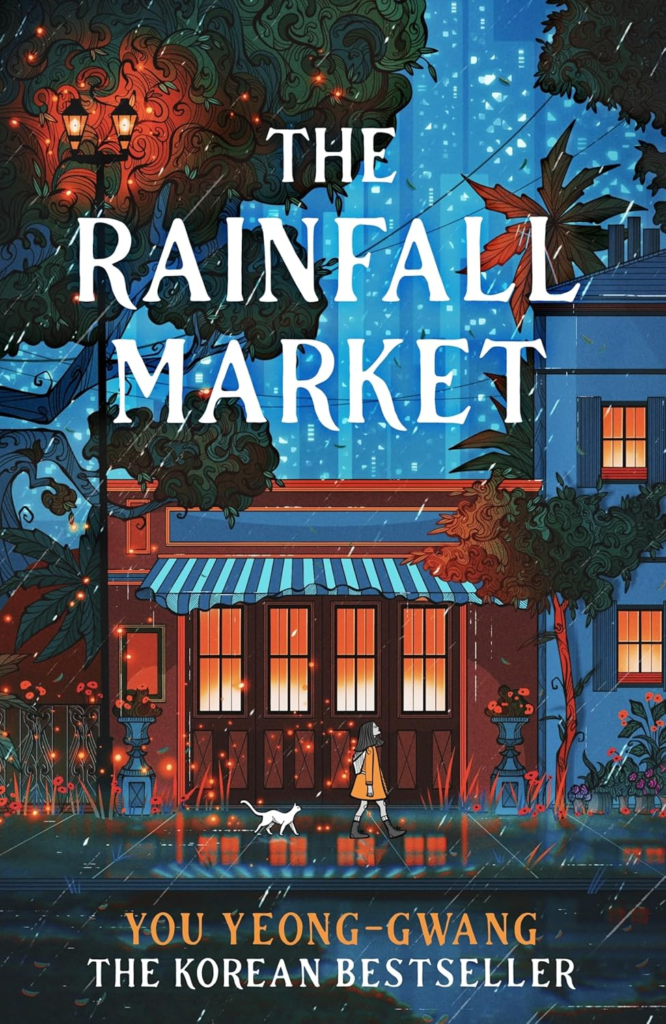
Best for: Readers who want a whimsical adventure about happiness, self-acceptance and the temptation of a different life.
Have you ever looked at someone else’s life and wondered whether they have everything figured out?
Perhaps they seem more successful, financially comfortable or simply happier than you are. It’s an easy comparison to make, particularly in a world where everyone appears to be constantly displaying the most attractive parts of their lives.
The Rainfall Market, translated by Slin Jung, takes this familiar feeling and builds an imaginative fantasy around it.
The story follows Serin, a young woman who receives an invitation to a mysterious market that appears during the rainy season.
Inside, visitors have the opportunity to exchange their current lives for better ones.
Accompanied by a cat named Isha, Serin explores the market in search of the perfect future. But she has only a limited amount of time to make her decision, and the possibility of becoming trapped adds some suspense to her adventure.
The premise is wonderfully suited to a story about comparison and dissatisfaction. It’s easy to imagine that happiness exists somewhere else, perhaps in another career, relationship or version of ourselves. What makes that idea interesting is whether getting everything we think we want would actually make us happier.
With its magical shops, unusual characters and gentle sense of adventure, The Rainfall Market is particularly appealing to readers who enjoy imaginative comfort fiction with a little more plot than the typical slice-of-life novel.
8. Soyangri Book Kitchen by Kim Jee Hye
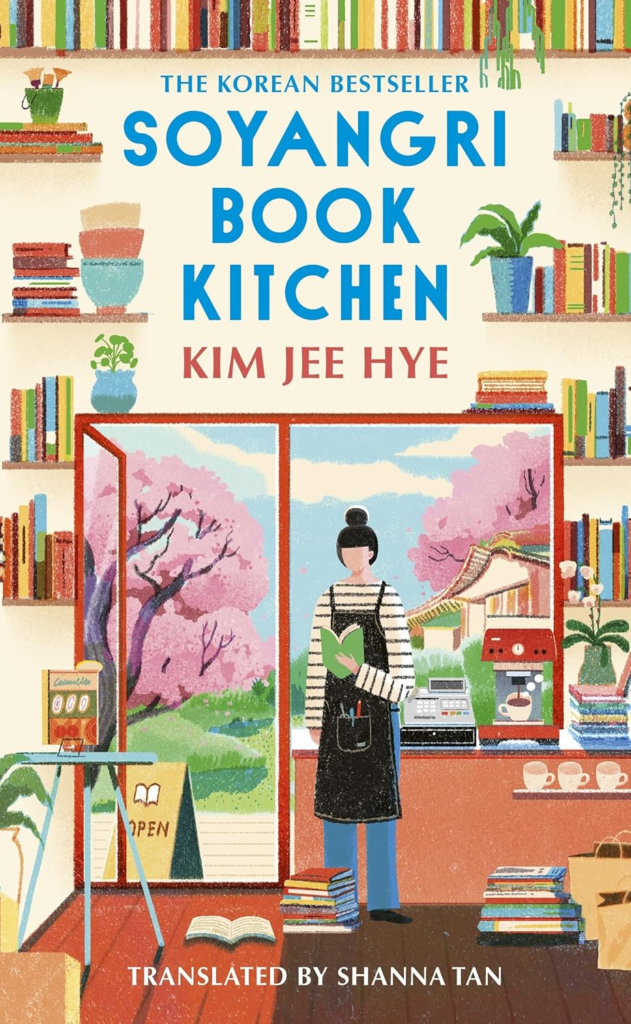
Best for: Book lovers who dream of escaping the city and spending a few days reading somewhere peaceful.
For anyone who has ever fantasised about disappearing into the countryside with a suitcase full of books, Soyangri Book Kitchen has an immediately appealing premise.
Translated by Shanna Tan, the novel follows Yoojin, who leaves behind the pressures of city life in Seoul to establish a bookshop café in a quieter village.
But this isn’t an ordinary bookshop: visitors can also stay overnight, enjoying good food, reading and an opportunity to step away from the demands of their everyday lives.
Over the course of a year, different guests arrive at the Book Kitchen, each carrying personal struggles or facing important decisions about their futures.
Among them are people dealing with professional disappointment, uncertainty about their identities and difficult changes in their circumstances.
The setting is undoubtedly one of the novel’s biggest attractions. A bookshop that offers accommodation, comforting meals and a peaceful environment sounds almost suspiciously perfect for anyone who enjoys reading.
Beneath that appealing premise, however, is a familiar theme in Korean healing fiction: the possibility that changing your environment, even temporarily, can help you see your problems differently.
It’s a lovely choice for readers drawn to stories about books, food, friendship and the restorative appeal of slowing down.
9. Hakuda Photo Studio by Her Taeyeon
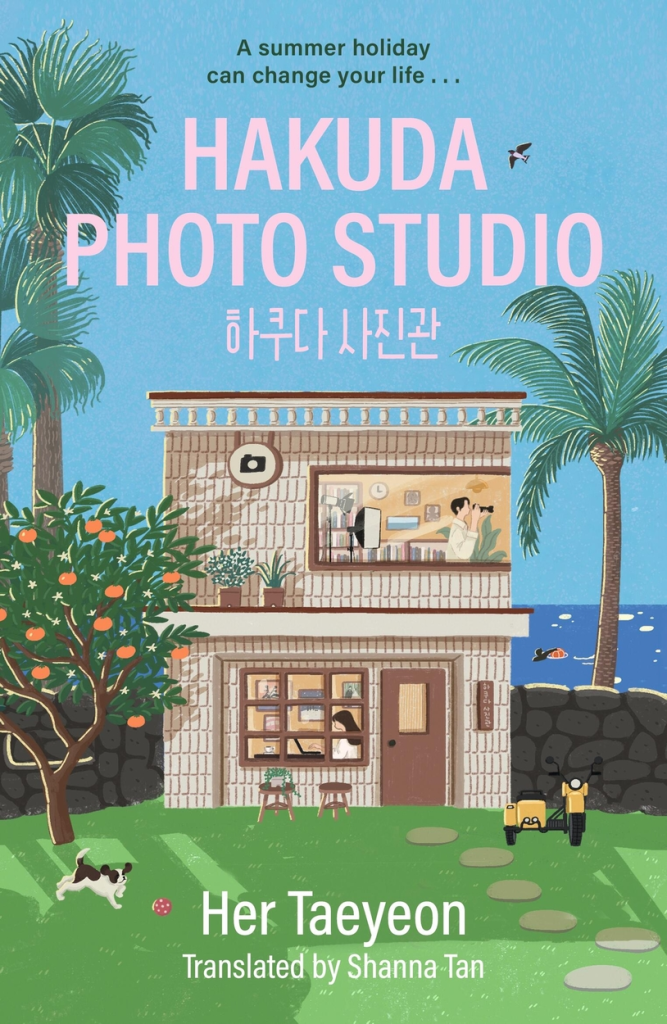
Best for: Readers who enjoy found-family stories, fresh beginnings and novels set somewhere beautiful.
Not every comforting novel needs to take place in a bookshop or café. Sometimes, the setting itself can provide much of the escape.
In Hakuda Photo Studio, translated by Shanna Tan, the story moves away from busy Seoul to Jeju Island, where Jebi has travelled for a much-needed break.
Unfortunately, her holiday takes an unexpected turn when she loses access to her phone, credit cards and flight ticket.
While searching for help, she encounters a small photography studio and eventually accepts a job working there.
As Jebi becomes involved in the studio’s daily life, she encounters island residents with their own stories, ambitions and regrets.
Photography provides a particularly appealing framework for exploring these lives. A photograph can capture a moment, preserve a memory or reveal something about a person that might otherwise go unnoticed.
The Jeju setting also distinguishes the novel from the many healing stories based in Seoul. Readers who enjoy fiction that gives them a sense of place may appreciate the change of scenery.
At its heart, the book is about rebuilding a life that no longer feels satisfying, and the unexpected relationships that can develop when someone finally gives themselves permission to try something different.
It’s a good option for readers who enjoy the found-family element of healing fiction but would prefer a slightly more expansive setting.
10. Return to the Dallergut Dream Department Store by Miye Lee
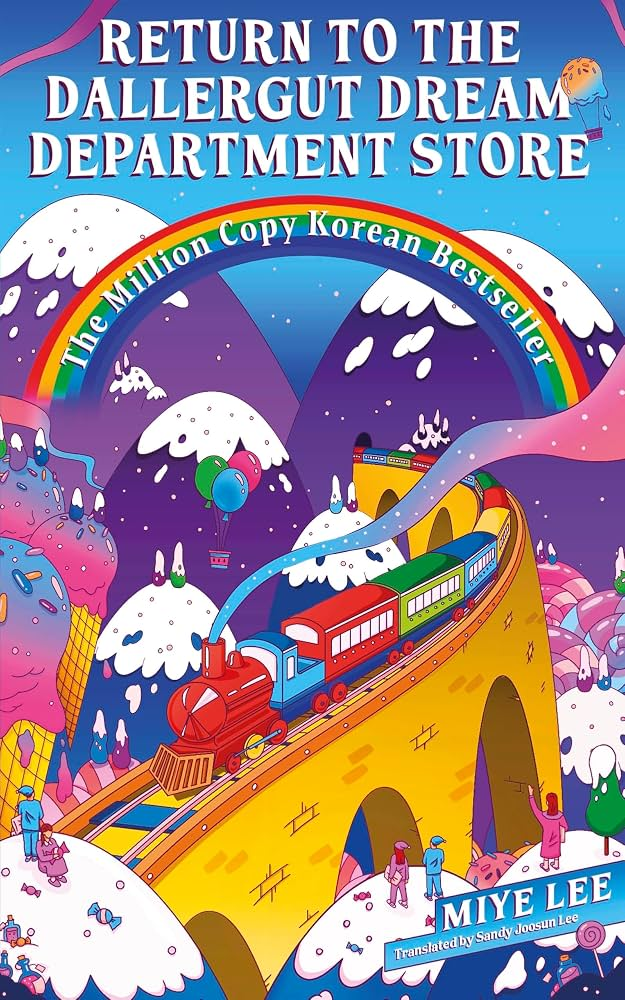
Best for: Readers who enjoyed the first Dallergut novel and want to spend more time in its magical world.
Some fictional worlds are so appealing that finishing the book feels rather disappointing, simply because you’re not ready to leave.
Fortunately, Miye Lee’s imaginative department store has a second instalment, translated by Sandy Joosun Lee.
Return to the Dallergut Dream Department Store revisits Penny, who has now completed her first year working in the dream industry.
With greater experience comes the opportunity to explore new aspects of the business, including the companies responsible for producing dreams and the customers whose experiences aren’t always as wonderful as the department store might suggest.
The sequel expands upon the imaginative world established in the first novel while retaining its interest in human emotions, relationships and the strange significance of dreams.
It’s particularly appealing for readers who enjoy cosy fantasy series where familiar characters gradually develop and the fictional setting becomes richer with each instalment.
However, I would strongly recommend starting with The Dallergut Dream Department Store rather than jumping straight into the sequel. Much of the enjoyment comes from already understanding Penny’s world and seeing how her experiences have changed her.
Which Korean Healing Fiction Book Should You Read First?
If you’re completely new to Korean healing fiction, I would start with Welcome to the Hyunam-dong Bookshop. It offers a good introduction to the genre’s recurring themes of burnout, community and the search for a more fulfilling life.
For something with a little more narrative momentum, The Second Chance Convenience Store is an appealing alternative. Its interconnected characters, everyday setting and element of mystery make it a relatively approachable read.
If you’re drawn to magical stories, The Dallergut Dream Department Store and The Rainfall Market are both good starting points, although the former is more whimsical while the latter has a clearer adventure-driven premise.
Readers who are feeling particularly exhausted by work may appreciate The Healing Season of Pottery, while those who simply want to imagine escaping somewhere peaceful should consider Soyangri Book Kitchen or Hakuda Photo Studio.
Why Are Korean Healing Novels So Popular?
Part of the appeal lies in how closely these novels reflect the pressures of modern life.
Many of their protagonists have spent years working towards conventional definitions of success, only to discover that professional achievement, financial stability or social approval hasn’t necessarily made them happy.
Burnout is a recurring theme, as is the feeling of being disconnected from other people despite living in increasingly crowded, technologically connected societies.
Korean healing fiction offers an alternative to these pressures, at least temporarily. Its characters are allowed to slow down, reconsider their priorities and find satisfaction in activities that might not have any obvious professional or financial benefit.
There is also something particularly appealing about the small communal spaces these stories create.
A bookshop, pottery studio or convenience store becomes more than a place of business. It becomes somewhere people can form relationships without needing to impress one another or demonstrate how successful they are.
For readers who are tired of novels filled with constant conflict and emotional upheaval, that gentler approach can be refreshing.
Are Korean Healing Fiction Books Always Happy?
Not necessarily, and I think this is worth understanding before choosing one.
Although the genre is generally associated with comforting stories, many Korean healing novels deal with difficult subjects, including grief, depression, loneliness, financial insecurity, addiction and family conflict.
The difference is usually in how these experiences are approached.
Rather than relying entirely on suffering or suspense, healing fiction often emphasises the possibility of change, whether through personal reflection, supportive relationships or small acts of kindness.
Some readers may find these stories uplifting, while others might consider them overly sentimental or slow-moving.
If you enjoy character development, thoughtful conversations and gentle endings, you’re more likely to appreciate the genre. If you prefer fast-paced plots with constant twists, you may find some of these novels less engaging.
Frequently Asked Questions
What is the best Korean healing fiction book for beginners?
Welcome to the Hyunam-dong Bookshop by Hwang Bo-reum is an excellent starting point. Its realistic setting, relatable characters and exploration of burnout capture many of the qualities associated with Korean healing fiction.
What is the difference between Korean healing fiction and Japanese healing fiction?
Both frequently explore emotional recovery, everyday relationships and small communal spaces such as bookshops and cafés. However, Korean healing fiction often places particular emphasis on workplace exhaustion, academic or social expectations and the pressure to achieve conventional success. These are broad tendencies rather than strict differences, and both traditions contain considerable variety.
Are Korean healing novels available in English?
Yes. Many popular Korean healing novels have been translated into English, including Welcome to the Hyunam-dong Bookshop, The Dallergut Dream Department Store, Marigold Mind Laundry and The Second Chance Convenience Store.
Which Korean healing fiction books have magical elements?
The Dallergut Dream Department Store, Marigold Mind Laundry and The Rainfall Market are particularly good choices for readers who enjoy magical premises. Each uses an imaginative setting to explore familiar emotional experiences.
Which Korean healing novels are best for readers who love bookshops?
Welcome to the Hyunam-dong Bookshop and Soyangri Book Kitchen are two strong options. Both explore the role of books and reading in bringing people together and helping them reconsider their lives.
Are Korean healing fiction books suitable for readers who dislike romance?
Yes. Although relationships sometimes develop between characters, many novels in this genre focus primarily on friendship, family, community and personal growth rather than romance. The Healing Season of Pottery and The Second Chance Convenience Store are good places to start.
Final Thoughts
There’s something reassuring about a genre that allows its characters to be ordinary.
They don’t have to save the world, uncover a conspiracy or accomplish something remarkable. They can simply be exhausted, uncertain or disappointed with the direction their lives have taken, and gradually find a way forward.
That’s what makes Korean healing fiction particularly appealing. Beneath the cosy bookshops, magical laundries and charming neighbourhood businesses are stories about people who are trying to make peace with themselves and the world around them.
These books won’t necessarily provide answers to every problem, and some may feel a little too sentimental for readers who prefer darker or more complex literary fiction.
But when you’re looking for something gentle to read after a difficult day, they offer a welcome reminder that change doesn’t always need to arrive through a dramatic life event. Sometimes, it begins with a conversation, a new hobby, an unexpected friendship or a quiet afternoon spent reading.
And occasionally, that’s exactly the sort of story we need.
Leave a Reply