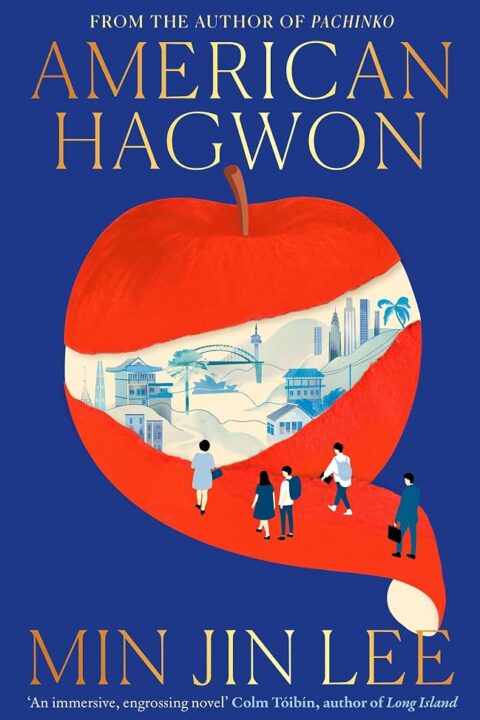
After the enormous success of Pachinko, Min Jin Lee returns with American Hagwon, another sweeping family saga that examines what happens when ordinary people find themselves at the mercy of economic forces, social expectations and the relentless pursuit of a better life.
This time, Lee turns her attention to education, particularly the enormous sacrifices Korean families make to give their children a competitive advantage. It’s a subject that will feel familiar to many Asian readers, even those who have never set foot inside a Korean hagwon. The expensive tuition classes, the obsession with prestigious universities, the parents who work themselves to exhaustion so their children might have an easier life. These are experiences that extend well beyond South Korea.
At 656 pages, American Hagwon is an ambitious novel spanning countries, generations and economic upheavals. Like Pachinko, it uses one family’s experiences to examine much larger questions about class, immigration and opportunity. But whereas Pachinko looked at the discrimination faced by Koreans living in Japan, American Hagwon is concerned with the promises and disappointments of education, and whether academic achievement can really guarantee a more secure future.
This review draws on the published novel’s synopsis and critical reception rather than a claimed firsthand reading.
Synopsis
The Koh family once enjoyed a comfortable middle-class existence in Seoul. John Koh had a respectable career, his wife Helen managed their family life, and their three children, Bo, DH and Mido, were growing up with the expectation that education and hard work would eventually lead to success.
Their circumstances change dramatically following a betrayal by John’s longtime friend and the economic turmoil surrounding the 1997 Asian financial crisis.
The family moves from Seoul to Sydney before eventually settling in Southern California, where John and Helen discover that their previous qualifications, professional experience and social standing carry considerably less weight than they once did.
As the parents struggle to rebuild their lives, the children encounter different opportunities and expectations. The family’s fortunes become increasingly connected to the world of hagwons, private educational institutions where students receive additional instruction in pursuit of better examination results and university admissions.
Over the following years, the Kohs and the people around them navigate financial insecurity, personal ambitions, family obligations and the increasingly uncomfortable question of how much anyone should sacrifice in pursuit of success.
What Works Well
One of the novel’s greatest strengths, judging by its critical reception, is the way Min Jin Lee connects individual decisions to the wider economic systems that shape people’s lives.
The Koh family’s financial difficulties are not simply the result of poor choices or a lack of effort. Their circumstances are transformed by events largely beyond their control, particularly the Asian financial crisis and the challenges of rebuilding a professional life after migration.
Lee has always been interested in the relationship between hard work and opportunity. In Pachinko, generations of Korean immigrants struggle against discrimination and social exclusion despite their determination to succeed. American Hagwon examines a related contradiction: what happens when people do everything society tells them to do, only to discover that success remains frustratingly uncertain?
The focus on education gives the novel particular relevance.
For many families, spending money on tuition is viewed as an investment rather than a luxury. Parents may cut back on holidays, work additional hours or sacrifice their own comforts because they believe academic success will eventually provide their children with financial stability.
Yet the novel questions whether this pursuit of security can become self-defeating. When everyone is investing increasingly large amounts of time and money in education, the competition becomes more intense without necessarily creating better opportunities for everyone.
Lee also appears particularly effective at portraying the emotional complexity of parental sacrifice. The desire to provide children with a better future comes from love, but that same love can become a source of pressure, resentment and unrealistic expectations.
The family’s migration adds another dimension to these questions. John and Helen must confront the humiliating experience of starting over in a country where their previous achievements are not fully recognised. Their children, meanwhile, have opportunities that their parents may never enjoy, creating an uncomfortable imbalance between generations.
What Could Be Better
The novel’s considerable length will probably be its biggest obstacle for some readers.
At more than 650 pages, American Hagwon takes its time establishing the Koh family’s circumstances and exploring the many people who enter their lives. Readers who appreciate immersive family sagas may enjoy this approach, but those expecting a tightly plotted narrative could find the pacing demanding.
The large cast also means that the novel must divide its attention between several characters, relationships and social issues. While this creates a convincing sense of an interconnected community, it can occasionally come at the expense of individual character development.
Some reviewers have also found the writing more explanatory than in Pachinko, particularly when Lee is establishing the economic and educational pressures affecting her characters. The novel’s interest in the systems surrounding the family sometimes becomes as prominent as the family’s personal story.
That said, these reservations are closely connected to Lee’s ambitions as a novelist. She is interested in how people live within larger social structures, and that requires a certain amount of patience from readers.
Themes and Discussion
The central question running through American Hagwon is whether education can genuinely protect people from an uncertain future.
For the Koh family, education represents hope. It offers the possibility of escaping financial insecurity, improving social standing and ensuring that the next generation will not have to endure the same hardships as their parents.
But the novel also examines the emotional consequences of treating academic achievement as the foundation of a person’s future.
When children are raised to believe that their examination results determine their worth, failure becomes something much more frightening than a disappointing grade. It can feel like a betrayal of the sacrifices their parents have made.
This pressure is particularly significant within immigrant families, where children may feel responsible for justifying their parents’ decision to leave behind familiar lives and established careers.
Another important theme is the instability of social class. The Kohs begin the novel with a relatively comfortable existence, only to discover how quickly financial security can disappear. Their experiences challenge the assumption that professional qualifications and responsible decisions will necessarily protect a family from economic hardship.
The novel also explores the difference between ambition and contentment. Its characters spend much of their lives striving for something better, whether that means a prestigious education, financial independence or greater social respectability.
Yet the pursuit of these goals raises an uncomfortable question: at what point does preparing for a better future prevent people from appreciating the lives they already have?
Writing Style
Readers familiar with Min Jin Lee’s earlier novels will recognise her interest in expansive, character-driven storytelling.
Rather than concentrating on a single protagonist, American Hagwon follows an interconnected group of family members, friends and acquaintances whose circumstances change over time.
This approach allows Lee to examine the same social pressures from different perspectives. Parents and children do not necessarily agree on what constitutes success, while characters from different economic backgrounds experience education and professional opportunity in very different ways.
Her storytelling is also grounded in ordinary experiences. Jobs, family disagreements, school fees and household finances become important parts of the narrative because these are the details through which larger social changes affect people’s lives.
The prose has been described by critics as precise and accessible, although some have found its explanatory passages less fluid than those in Pachinko. Readers who enjoy richly developed social novels may appreciate the attention to detail more than those who prefer a faster-moving story.
Final Verdict
American Hagwon is an ambitious examination of education, immigration and the enormous expectations families place on the next generation.
What makes its premise particularly compelling is the recognition that parental sacrifice, however well-intentioned, does not always produce the happiness or security it is supposed to guarantee.
Min Jin Lee explores a contradiction familiar to many families: parents work tirelessly so their children can enjoy better lives, while those children grow up under the weight of expectations created by that very sacrifice.
Although its length and expansive cast may test the patience of some readers, the novel offers a thoughtful perspective on the relationship between ambition, family duty and economic uncertainty.
For readers who loved Pachinko, American Hagwon offers another opportunity to explore the Korean diaspora through a richly layered family narrative. Its focus on education also makes it especially relevant to readers interested in the social pressures surrounding academic achievement.
It is a novel whose central question extends far beyond the classroom: what does it actually mean to give someone a better life?
Leave a Reply