
From the changing of book titles to the popularity of cosy Japanese and Korean fiction, the international success of Asian literature raises an uncomfortable question: are English-language readers discovering these books on their own terms, or through the versions publishers believe they want to read?
There is something slightly predictable about the way Asian literature is presented to English-language readers.
Japanese novels are often described as quiet, quirky or gently philosophical. Korean novels are increasingly marketed as either disturbing examinations of society or comforting stories about exhausted people rediscovering themselves. Chinese fiction, particularly science fiction, is frequently introduced through its extraordinary scale, ambitious ideas or ability to offer a glimpse into a society that many Western readers know relatively little about.
These descriptions aren’t necessarily inaccurate. Some Japanese novels really are quiet and introspective, while Korean healing fiction has become a recognisable literary phenomenon in its own right.
But when similar descriptions appear repeatedly, I begin to wonder whether readers are being introduced to the full range of literature produced in these countries or simply the parts that are easiest to package for an international audience.
The distinction is important because a book doesn’t arrive in another country as an untouched cultural object. It travels through a series of decisions involving publishers, literary agents, translators, editors, cover designers, publicists and booksellers.
Someone decides whether the manuscript is worth translating. Someone else determines how its title should appear in English. A cover is designed, a genre is assigned and a marketing description is written to convince readers that this unfamiliar book belongs on their shelves.
By the time the novel reaches a bookshop in London, New York or Singapore, readers have already been given several clues about what they are supposed to expect.
I don’t think this process is inherently dishonest. Publishers need to help people discover books, and translation itself involves difficult decisions about language and cultural meaning. Without these efforts, many extraordinary novels would never reach readers outside their countries of origin.
But international popularity isn’t the same thing as an accurate representation of a country’s literature.
The question worth asking is what happens to a book’s identity when its presentation is shaped by the expectations of a different market.
And the answers are more complicated than simply blaming publishers for changing book covers.
A Different Title Can Change the Way We Understand a Character
One of the clearest examples is Convenience Store Woman by Sayaka Murata, translated from Japanese into English by Ginny Tapley Takemori.
First published in Japan in 2016, the novel follows Keiko Furukura, a woman who has spent much of her adult life working at a convenience store. Keiko doesn’t share society’s assumptions about marriage, employment or what a respectable adult life should look like. Her job provides the structure and sense of belonging that she struggles to find elsewhere.
The English title is immediately appealing. It identifies the setting, introduces the protagonist as a woman and suggests an unusual character-driven story.
But the original Japanese title, Konbini Ningen (コンビニ人間), means something closer to Convenience Store Human or Convenience Store Person.
The word ningen directs attention towards Keiko’s humanity and the strange relationship between her identity and the institution she works for. It evokes the possibility that she has become a particular kind of human being, one whose routines, behaviour and understanding of herself are organised around the convenience store.
The English title, by contrast, places greater emphasis on her gender. This isn’t necessarily an unreasonable decision. Keiko is a woman, and society’s expectations surrounding marriage, motherhood and female adulthood are central to the novel. But the change subtly alters the reader’s first encounter with the story.
Convenience Store Woman invites us to think about a woman who doesn’t fit society’s expectations. Convenience Store Human raises a broader, stranger question about what it means to function as a person within a highly regulated social environment.
Those interpretations overlap, but they aren’t identical.
In a 2018 essay published by Nippon.com, translator and critic Michael Emmerich discusses the significance of ningen, including its associations with people whose identities become absorbed into an organisation. More recently, Murata herself has discussed the different nuances of the English title in an interview published by Shueisha.
Interestingly, Murata expressed a relatively accepting attitude towards the title change, recognising that what sounds natural in one language may not work in another.
I think that makes this a particularly useful example.
The point isn’t that the English title is wrong or that the Japanese title should have been translated literally. An awkward English title might create a completely different problem. Rather, it demonstrates that the process of making a novel accessible inevitably involves deciding which aspects of its identity to foreground. Even before readers open the book, an interpretation has already been made on their behalf.
The Vegetarian and the Question of Whose Voice We Are Reading
The debate surrounding Han Kang’s The Vegetarian reveals a much more contentious version of the same problem.
Originally published in Korean in 2007, the novel appeared in English translation by Deborah Smith in 2015 and went on to win the 2016 Man Booker International Prize.
For many English-language readers, The Vegetarian was their introduction to Han Kang’s writing.
Its disturbing exploration of bodily autonomy, family violence and resistance to social expectations attracted considerable critical attention. But its success also prompted questions about how closely the English-language prose resembled the original Korean.
Korean scholars and critics identified errors, omissions and additions in Smith’s translation. Some argued that her version made Han’s restrained language more elaborate and altered aspects of the characters’ personalities.
The controversy was not simply about individual words. It raised questions about whether stylistic changes could affect the meaning of an entire novel.
A deliberately spare sentence might become more emotionally expressive in English. A character who seems casually insensitive in Korean might appear more openly hostile in translation.
Such differences matter because literary style is not merely decoration.
The way an author constructs a sentence can influence how readers judge a character, interpret an action or respond emotionally to a scene.
If a translation makes a character’s motivations more explicit, readers may lose some of the ambiguity the author intended.
Yet the controversy also revealed the limitations of treating translation as a straightforward exercise in linguistic accuracy.
Han herself has rejected the suggestion that Smith deliberately undermined the novel or created an entirely different work. In a later interview with the Booker Prizes, she acknowledged that errors had occurred and explained that Smith made 67 corrections in 2017.
Han also described translation as an inherently difficult process involving unavoidable losses in rhythm, meaning and cultural context.
I find her response more illuminating than either extreme of the debate.
It’s too simplistic to argue that translators should never depart from the original wording. Languages do not operate through perfectly interchangeable structures, and literal translation can produce prose that is technically accurate but aesthetically unsuccessful.
But it’s equally difficult to dismiss substantial changes as irrelevant simply because the resulting English novel is compelling.
For readers unable to read Korean, the English translation effectively becomes Han Kang’s literary voice.
We may admire its imagery, sentence structures and emotional effects without knowing which elements belong most directly to Han and which have been shaped by Smith’s interpretation.
That uncertainty doesn’t invalidate the reading experience. It does, however, challenge the assumption that we have encountered the original work without mediation.
Perhaps the most troubling part of this debate is that the English-language version can become internationally authoritative precisely because it is the version most widely reviewed, discussed and rewarded.
The translation may be the only text that many foreign critics are able to evaluate.
When that happens, the relationship between an author’s original language and their international reputation becomes far more complicated than the words “translated by” might suggest.
Sometimes Translation Gives a Novel Something Back
There is, however, a danger in discussing translation entirely through the language of loss.
One of the most fascinating counterexamples comes from The Three-Body Problem by Liu Cixin, translated into English by Ken Liu. The Chinese science-fiction novel tells a story involving humanity’s encounter with an alien civilisation, but its plot is deeply connected to the violence and ideological upheaval of China’s Cultural Revolution.
The original Chinese edition and the 2014 English translation begin differently.
In the Chinese edition, readers initially encounter the contemporary scientific mystery, with the Cultural Revolution material introduced later through flashbacks.
In the English version, Ken Liu moved those historical chapters to the beginning.
Ordinarily, rearranging a novel’s opening would be considered a remarkably significant intervention by a translator. But the decision was made with the author’s agreement.
Liu Cixin had originally wanted the novel to begin with the Cultural Revolution, but the structure was changed because of concerns about the political sensitivity of that material in China.
Ken Liu’s English translation therefore restored an opening that the author had previously wanted.
In a 2019 interview reported by The New York Times Magazine, Liu Cixin said that he believed the translation had gained something rather than lost it.
This example complicates the familiar assumption that the original published edition is always a pure expression of the author’s intentions. Books are edited, shaped and sometimes constrained before they ever reach their first audience. Political considerations, commercial expectations and editorial judgments exist within Asian publishing markets too.
An English translation may introduce new compromises, but it can also remove restrictions imposed on the earlier edition.
The important question is not simply whether the translated book is different.
It’s who made the changes, why they were made and what effect they have on the story.
The Three-Body Problem also demonstrates why we should be careful about assuming that books published in Asia are always closer to their authors’ ideal versions.
Literature is produced within institutions everywhere.
The idea that Western publishing transforms authentic Asian works into commercial products is an appealingly simple narrative, but it overlooks the compromises that can exist in the original publishing process.
When a Novel Becomes a Symbol of an Entire Society
Another form of simplification happens when the international reception of a novel becomes more concerned with what it supposedly reveals about a country than with the literary work itself.
Consider Kim Jiyoung, Born 1982 by Cho Nam-joo, translated into English by Jamie Chang.
Published in South Korea in 2016, the novel follows an ordinary woman whose experiences expose the discrimination and expectations faced by Korean women throughout their lives.
Its subject matter is familiar enough to resonate internationally: unequal domestic responsibilities, workplace discrimination, social pressure surrounding motherhood and the gradual loss of personal independence.
But in South Korea, the book became part of an especially contentious public conversation about feminism.
It was enormously successful, selling more than a million copies, while also attracting criticism from opponents of feminism. Its 2019 film adaptation generated further controversy.
By the time the English translation appeared in 2020, the novel already carried a reputation as an important feminist bestseller.
That history became part of the way international readers were introduced to it.
There is obvious value in explaining its cultural significance. Without that context, readers might not understand why a relatively short novel about an apparently ordinary woman’s life provoked such intense reactions.
Yet I think there’s also a risk in presenting a novel primarily as evidence of what is wrong with a particular society.
For an international audience, Kim Jiyoung, Born 1982 can become a convenient introduction to sexism in South Korea. But treating the novel chiefly as a window into Korean gender politics may flatten its literary intentions.
The protagonist’s ordinary name, the clinical narration and the inclusion of statistical material are important formal decisions. They contribute to the book’s argument by challenging the notion that the discrimination Jiyoung experiences is exceptional.
The novel isn’t simply telling readers that Korean society has problems. It’s examining how those problems become normalised, often to the point where they cease to be recognised as problems at all.
And while its historical context is distinctly Korean, many of the pressures it describes will be familiar to women elsewhere, and that certainly includes women in Western countries.
There is something rather convenient about reading a novel about gender inequality primarily as an explanation of another society’s shortcomings. It allows readers to acknowledge injustice while keeping the problem at a comfortable geographical distance.
I would argue that the novel becomes more challenging when readers resist that distance.
The question shouldn’t only be what Kim Jiyoung, Born 1982 tells us about South Korea. It should also be why so many of its experiences remain recognisable across different cultures.
The Problem With Making Asian Stories Universally Relatable
Publishers often emphasise the universal qualities of translated fiction.
A novel may be deeply rooted in a particular society, but its marketing will highlight themes such as love, grief, family, sacrifice or belonging.
This makes commercial sense. Readers may be more willing to pick up an unfamiliar book when they recognise an emotional experience within it.
But the pursuit of universality can sometimes diminish the social circumstances that make a story distinctive.
Please Look After Mom by Kyung-sook Shin, translated from Korean by Chi-Young Kim, offers an interesting example.
The novel begins when an elderly mother disappears at Seoul Station. As her family searches for her, they begin confronting how little they understood about her life, sacrifices and private suffering.
Its appeal as a family story is immediately apparent. Many readers, regardless of nationality, can recognise the guilt of taking a parent’s care for granted or discovering too late that someone close to them had an interior life they never fully appreciated.
The English-language publisher’s description understandably emphasises these emotionally accessible themes.
But the novel is also connected to South Korea’s transformation from a predominantly rural society into an urban, industrialised nation.
The mother’s sacrifices have a social and historical dimension. Her children benefit from opportunities that were not available to her, while the family gradually moves away from the world in which she spent much of her life.
The story therefore asks more than whether children appreciate their mothers.
It examines the unequal burdens placed on women during periods of rapid social change, including how one generation’s labour enables another generation’s mobility.
Those circumstances are not interchangeable with every other story about maternal sacrifice.
When the novel is discussed primarily as a universal reminder to appreciate our parents, its sharper questions about gender, class and economic transformation can become less visible. There’s a further complication here. Stories about self-sacrificing Asian mothers are already familiar in international discussions of Asian family life. If a novel is marketed mainly through that expectation, readers may approach its protagonist as another example of a recognisable cultural type.
Yet the whole point of Please Look After Mom is that the family has failed to understand the woman behind the role she performs.
It would be unfortunate if international readers repeated a similar mistake by reducing her to the familiar figure of the devoted Asian mother.
A novel’s universal appeal should help readers enter an unfamiliar world.
It shouldn’t become an excuse to ignore the features that make that world unfamiliar.
When Japanese and Korean Fiction Becomes a Lifestyle Aesthetic
The international popularity of Japanese and Korean healing fiction raises a related concern.
Spend some time browsing contemporary translated-fiction displays and a particular kind of book becomes easy to recognise.
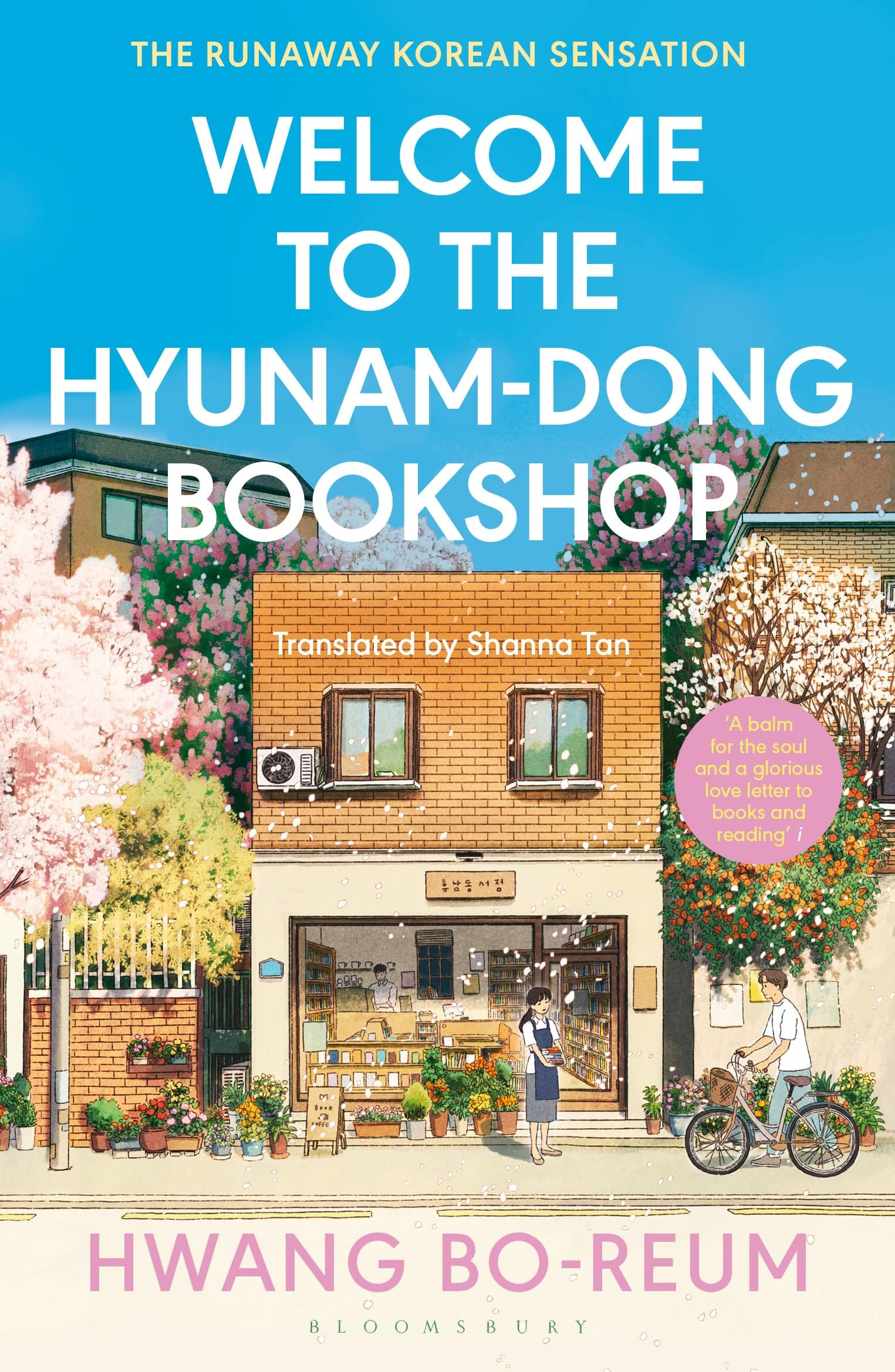
There may be a cosy shopfront, a neighbourhood café, a cat, a collection of warm colours or a title referring to books, coffee, dreams or a place where troubled people can find comfort.
These visual and thematic conventions have developed in Asian markets as well, particularly within South Korea’s healing-fiction trend. They are not inventions of Western publishers.
Nevertheless, their international success has encouraged a recognisable way of presenting certain novels.
Welcome to the Hyunam-dong Bookshop by Hwang Bo-reum, translated by Shanna Tan, is a useful example.
Its protagonist leaves an exhausting professional life and opens a neighbourhood bookshop, where relationships gradually form around reading, coffee and the search for a more satisfying existence.
The premise lends itself beautifully to marketing. For readers overwhelmed by work or tired of increasingly competitive lifestyles, the idea of retreating into a welcoming bookshop is enormously attractive.
But the novel’s concerns are more specific than its comforting atmosphere. It is interested in burnout, the social importance of professional success and the difficulty of finding meaning outside conventional achievements. These questions carry particular weight within South Korea’s highly competitive educational and working environment.
If international readers approach the novel mainly as an invitation to spend a pleasant afternoon in a fictional bookshop, they may overlook the critique of working life that makes the protagonist’s decision significant.
A similar issue arises with Before the Coffee Gets Cold by Toshikazu Kawaguchi, translated from Japanese by Geoffrey Trousselot.
Its premise is wonderfully marketable: customers at a Tokyo café can travel back in time, although their visit must end before their coffee becomes cold.
The novel is frequently promoted through its warmth, emotional appeal and imaginative setting. But the stories involve regret, bereavement, estrangement and relationships that cannot simply be repaired. The café’s comforting atmosphere exists alongside the painful recognition that even supernatural opportunities cannot necessarily change the past.
Not every novel set in a café is lighthearted. Not every story about healing promises recovery.
And not every quiet Asian novel should be categorised as healing fiction simply because it lacks the dramatic conventions associated with Western commercial thrillers.
The broader risk is that publishers, booksellers and readers begin treating Asian fiction as a source of particular emotional experiences. Japan offers quirky introspection. Korea offers either social trauma or comforting recovery. China offers expansive historical or speculative narratives.
These categories may be commercially useful, but they are poor substitutes for understanding the diversity of literature produced within each country.
What We Don’t See May Matter More Than What Gets Changed
So far, the examples have concerned books that successfully reached English-language readers.
But perhaps the more significant question is which books never receive that opportunity.
The books that are translated are not necessarily a representative selection of everything being published in their original languages.
They are selected through a combination of literary reputation, commercial potential, translation funding, rights availability, editorial interest and assumptions about what readers might buy.
A novel that resembles an internationally successful book may be easier to position than one that doesn’t fit an established category.
If publishers know that English-language readers are purchasing novels about mysterious Japanese cafés, it becomes commercially tempting to look for more books that can be introduced through similar premises.
If a Korean novel wins a major international prize, other works that appear to share its themes or literary sensibility may suddenly seem more attractive.
This is understandable publishing behaviour, but it creates a subtle distortion.
Readers may begin believing that certain themes, styles or genres dominate a country’s literature simply because those are the books most visible in translation.
Meanwhile, novels about local political disputes, class tensions, regional identities or social experiences that require more explanation may struggle to receive comparable attention.
These stories aren’t necessarily less accomplished.
They may simply be harder to sell through a familiar marketing description.
The resulting imbalance can influence how readers perceive an entire national literature.
If the translated selection is narrow, even enthusiastic readers may develop a limited understanding of what writers in that country are producing.
And because readers can only choose from books made available to them, market demand and publishing supply begin reinforcing one another.
Publishers produce more of what has sold. Readers become more familiar with those categories. New books are then promoted through comparisons with the same established successes.
Over time, an entire literary culture can appear more homogeneous than it really is.
Asian Literature Isn’t a Single Category, Either
There is another problem with the way we discuss Asian literature internationally: we often treat books connected to Asia as though they belong to the same literary tradition.
Consider Pachinko by Min Jin Lee. The novel tells the story of a Korean family living in Japan across several generations, exploring discrimination, displacement and the difficulties of belonging to a society that continues to regard them as outsiders.
It is frequently discussed alongside Korean literature, and understandably so. Its subject matter is deeply connected to Korean history and the experiences of ethnic Koreans in Japan.
But Pachinko was originally written in English by a Korean American author and first published in the United States in 2017. It was subsequently translated into Korean.
Pachinko should not be treated as a translated Korean novel simply because it concerns Korean lives.
Its language, intended readership and literary context differ from those of a novel originally written for South Korean readers.
This doesn’t make it any less Korean in subject matter or less valuable as an exploration of Korean identity.
It simply demonstrates why ethnicity, language, nationality, setting and literary tradition should not be treated as interchangeable categories.
A novel by a Japanese author writing in Japanese for domestic publication occupies a different position from one by a Japanese American author writing in English about family migration.
Both may belong in a broad discussion of Asian literature, but their relationships with publishing markets and readers are different.
The distinction becomes even more important when considering literature from Singapore, India, Malaysia, the Philippines and other multilingual societies where English may be one of the languages in which writers originally work.
Not every Asian novel needs to be translated to reach an English-speaking audience.
And not every Asian writer is writing for readers outside Asia who need their culture explained to them.
The category is useful for discovering books, but it becomes reductive when we forget how much diversity it contains.
Western Readers Aren’t All Looking for the Same Thing
I also think the phrase “Western readers” deserves some scrutiny.
The English-language book market encompasses readers with very different cultural backgrounds, levels of familiarity with Asia and expectations of literature.
An English-language reader in London whose family migrated from Hong Kong may approach a Chinese novel differently from someone encountering Chinese literature for the first time.
A Korean American reader may recognise social references that another reader overlooks. Someone who has lived in Japan might respond differently to Convenience Store Woman than someone whose understanding of Japanese workplaces comes entirely from fiction.
Even within the same country, reading experiences vary considerably.
For a reader in Singapore, the boundaries become more complicated still.
We read many of the same English-language editions sold in Britain and the United States, but our cultural reference points are not necessarily the same.
Some of the family expectations, workplace pressures and educational anxieties portrayed in Korean and Japanese fiction may feel familiar in ways that publishers do not anticipate.
Other elements remain culturally specific and require explanation.
This is why I find the idea of translating or marketing Asian literature for a single Western audience increasingly inadequate.
There is no universal international reader who needs precisely the same amount of context, explanation or cultural familiarity.
The best publishing decisions acknowledge this complexity rather than assuming every unfamiliar detail must be made accessible through simplification.
Readers are capable of encountering things they don’t immediately understand.
In fact, discovering unfamiliar social practices, historical experiences and literary conventions is part of what makes reading across cultures worthwhile.
What Would Better International Publishing Look Like?
I don’t think the solution is to demand that every translated book retain its original title, cover or cultural references without alteration.
Translation requires interpretation, and publishing is a commercial enterprise. Making a book appealing to new readers is not inherently disrespectful to its origins.
Nor should we assume that Asian publishers are always more authentic or less commercially motivated than Western ones.
The example of The Three-Body Problem demonstrates why that assumption is difficult to sustain.
What I would like to see is greater transparency about the choices involved.
When a title has been changed, explaining the original meaning can enrich the reading experience. The distinction between Konbini Ningen and Convenience Store Woman, for example, gives readers another way to consider Keiko’s relationship with society.
When a translation has attracted significant debate, acknowledging that debate allows readers to understand how literary interpretation can vary across languages.
Publishers could also provide more context without turning novels into academic textbooks.
A thoughtful translator’s note, an author interview or a short explanation of a book’s domestic reception can help readers appreciate its significance without interrupting the story itself.
Most importantly, I would like to see a broader range of Asian literature made available in English.
Not every Japanese novel needs to be whimsical. Not every Korean novel needs to offer social commentary or emotional healing. Not every Chinese novel needs to be introduced through its scale or its ability to explain contemporary China.
Writers in these countries produce work that is funny, experimental, ordinary, politically uncomfortable, commercially entertaining, deeply local and sometimes difficult to categorise.
They should have the opportunity to reach international readers without always being measured against the expectations created by previous publishing successes.
That requires a willingness to introduce books that may not fit an established marketing trend.
It also requires readers to be a little more adventurous.
Final Thoughts: A Book Should Be Allowed to Remain Unfamiliar
The international success of Asian literature is something worth celebrating.
English-language readers now have access to novels that might once have remained largely unknown outside their countries of origin. Translators are receiving greater recognition, and publishers have demonstrated that readers are willing to engage with stories rooted in unfamiliar histories and cultures.
These are meaningful developments.
But commercial success should not prevent us from examining how those stories are presented.
A changed title can alter a novel’s emphasis. A translation can reshape its prose. A marketing campaign can foreground the most accessible themes while pushing its social and historical complexity into the background.
Perhaps most importantly, the selection of books made available in translation can influence what international readers believe a country’s literature looks like.
The problem isn’t that publishers want Asian novels to feel relatable.
It’s that relatability can become a limiting expectation.
A reader doesn’t need to recognise every cultural reference to appreciate a novel. They don’t need every social custom explained, every unfamiliar idea connected to something they already know or every difficult story presented as a lesson about its country of origin.
Sometimes, the most valuable part of reading literature from another culture is encountering perspectives that resist easy comparison with our own.
I would rather finish a novel with unanswered questions about its setting, language or society than feel that an entire country has been neatly explained to me in three hundred pages.
The books we remember often challenge our assumptions rather than confirm them.
And if international publishing is genuinely interested in bringing different literary cultures together, it should leave room for those differences to remain visible.
What gets lost when Asian literature is marketed too carefully for international readers is not necessarily its plot or even its cultural identity. Sometimes, what disappears is the freedom for a book to be unfamiliar, difficult, unsettling or simply unlike the other Asian novels that have already sold well.
That is a loss worth paying attention to.
Leave a Reply