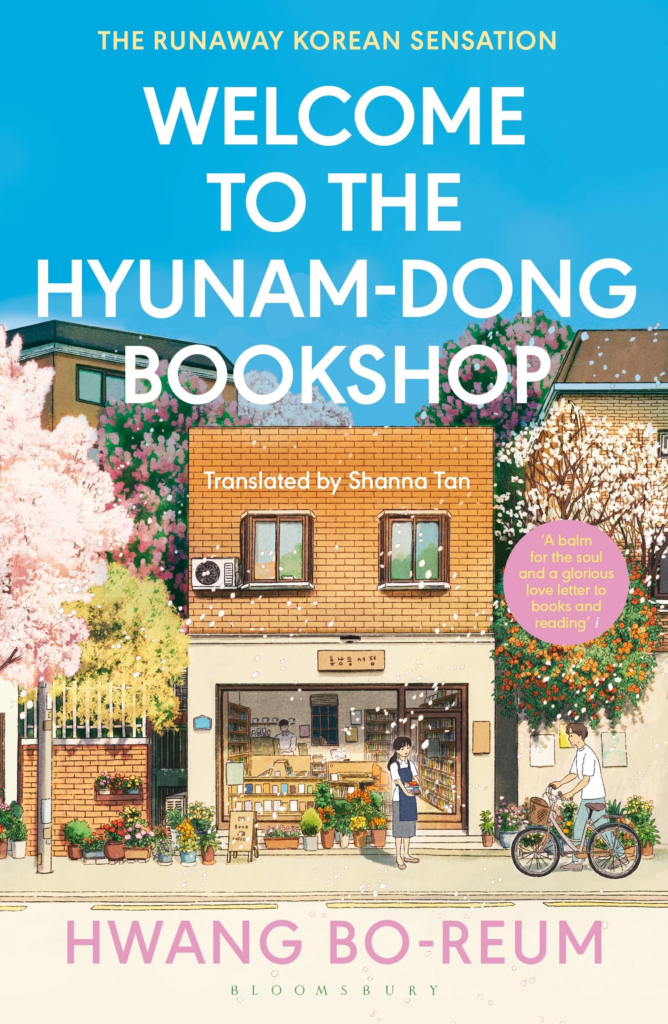
The appeal of Korean healing fiction is easy to understand. But somewhere between the cosy bookshops, gentle conversations and reassuring life lessons, comfort can begin to feel a little manufactured.
There is a particular kind of novel that has become increasingly familiar in Korean translated fiction. Someone is exhausted by their job, disappointed with their life or struggling with the expectations placed upon them. They find themselves in a small bookshop, pottery studio, laundromat or café, where a collection of equally troubled strangers gradually helps them rediscover what really matters.
There may be a friendly cat. There is almost certainly coffee. Someone will eventually say something thoughtful about slowing down, learning to love yourself or recognising that success means different things to different people.
By the end, everyone is usually a little wiser.
I understand why these novels have become so popular. Life is tiring enough without every book demanding that we confront another tragedy, dysfunctional relationship or morally reprehensible protagonist. Sometimes, there’s enormous appeal in spending a few hundred pages somewhere people are fundamentally kind to one another.
But having explored the premises and critical reception of several popular Korean healing novels, I find myself increasingly interested in a different question: why do some comforting stories feel emotionally convincing, while others seem to offer little more than a collection of reassuring statements?
The distinction matters because comfort isn’t quite the same thing as good storytelling.
A beautifully illustrated bookshop on the cover, a sympathetic protagonist and a hopeful ending might create the expectation of an enjoyable reading experience. Whether the novel actually delivers depends on something more difficult to manufacture: believable characters, meaningful emotional development and enough honesty about life’s complications to make its reassurance worthwhile.
The Problem With Books That Promise to Make Us Feel Better
Korean healing fiction has become a recognisable publishing category, particularly in English translation. Novels such as Welcome to the Hyunam-dong Bookshop by Hwang Bo-reum, The Dallergut Dream Department Store by Miye Lee and Marigold Mind Laundry by Jungeun Yun have introduced international readers to a style of storytelling that prioritises emotional recovery over dramatic conflict.
The genre’s popularity makes sense within the context of contemporary South Korean society, where competition surrounding education, employment and professional success can exert considerable pressure on individuals.
The characters in these books are often people who have done everything they were supposed to do. They studied hard, secured respectable jobs and tried to meet their families’ expectations. Yet somewhere along the way, they discovered that the lives they had worked so hard to build weren’t making them particularly happy.
For readers in Singapore, I suspect this premise is especially familiar.
We may not experience precisely the same social pressures, but the underlying expectations are recognisable. Academic achievement is frequently treated as the beginning of a long series of milestones: a good university, a stable career, financial security and eventually a comfortable family life.
The assumption is that happiness will follow once enough of these milestones have been achieved.
Healing fiction questions that assumption, usually by introducing characters who decide to pursue a quieter, less conventionally ambitious existence.
There’s nothing inherently wrong with this message. If anything, it’s a useful counterpoint to a culture that often treats productivity as a measure of personal worth.
The difficulty arises when the message becomes so central to the story that the characters begin to feel like vehicles for delivering it.
A novel can reassure readers that it’s acceptable to slow down without making us believe that the protagonist’s life has meaningfully changed. It can tell us that kindness matters without giving us a convincing relationship through which to understand that kindness. The emotional effect is not quite the same.
When Characters Start Sounding Like Self-Help Books
One of the recurring criticisms of Korean healing fiction is that its characters can sometimes sound less like ordinary people and more like unusually articulate motivational speakers.
A troubled customer enters a bookshop. Someone offers a thoughtful observation about happiness. The customer reflects on their circumstances and begins to see things differently.
There’s something appealing about that exchange, particularly when the advice is sensible and the problem is familiar.
But after several variations of the same scene, the conversations can become predictable.
This is one of the tensions surrounding Welcome to the Hyunam-dong Bookshop, perhaps the most recognisable example of contemporary Korean healing fiction.
The novel follows Yeongju, who abandons an exhausting professional life to establish a neighbourhood bookshop. Over time, the business becomes a gathering place for people reconsidering their relationships, careers and personal ambitions.
The premise has considerable appeal. Yeongju’s decision to create a life organised around something she loves challenges the assumption that professional success must always take priority.
Yet published criticism of the novel has been divided over its reflective style. Some reviewers appreciate the extended conversations about work, books and happiness, while others find that the philosophical discussions begin to overwhelm the narrative.
I think this disagreement reveals an important distinction between fiction that encourages reflection and fiction that simply explains what readers are supposed to think.
A thoughtful conversation can be moving when it emerges naturally from a character’s experiences. It becomes less convincing when everyone seems capable of articulating their emotional difficulties with the clarity of a therapist who has spent years studying the subject.
Real people are rarely so accommodating. We misunderstand ourselves, resist perfectly reasonable advice and sometimes continue making the same mistakes even when we know exactly what needs to change.
A comforting novel doesn’t have to reproduce all the frustrations of real life, but it needs enough of that uncertainty to make its characters believable.
Otherwise, the result can feel less like observing people gradually find their way through difficult circumstances and more like sitting through a series of agreeable lectures.
Why Small, Ordinary Changes Can Be More Convincing Than Grand Revelations
One of the more promising aspects of healing fiction is its attention to ordinary routines.
In The Healing Season of Pottery by Yeon Somin, the protagonist Jungmin withdraws from professional life after experiencing severe burnout. Her eventual involvement with a pottery workshop gives her an opportunity to reconnect with the world through a creative activity that requires patience and concentration.
What makes this premise interesting is that pottery offers something different from the professional environment Jungmin has left behind.
There is no immediate career advancement to pursue, no examination to pass and no obvious reason to measure every completed piece against someone else’s achievements.
Working with clay involves repetition, mistakes and a degree of acceptance that not everything can be controlled.
As a metaphor for emotional recovery, it has considerable potential precisely because it is grounded in a physical activity rather than a philosophical conversation.
A person doesn’t necessarily need someone to explain why slowing down is important. Sometimes, the act of spending an afternoon making something with their hands can communicate that idea more effectively.
This is where I think healing fiction can be especially successful.
The most convincing changes are often small enough to feel possible.
A character who has been isolated begins attending a weekly class. Someone accustomed to working late makes time to eat dinner with a friend. Another person learns to enjoy a hobby without immediately considering whether it could become a profitable side business.
These developments may not sound particularly exciting, but they can be emotionally satisfying when the story gives us reason to understand why they matter.
The challenge is allowing those changes to unfold rather than announcing their significance.
A novel about pottery doesn’t become moving simply because pottery is therapeutic. It becomes moving when the reader understands what the activity offers a particular character that was missing from their life.
Does Healing Fiction Make Recovery Look Too Easy?
One of the more uncomfortable questions surrounding the genre is whether its optimistic worldview occasionally underestimates how difficult it can be to change your circumstances.
The recurring fantasy of leaving an exhausting corporate job to open a bookshop is an obvious example.
Who wouldn’t occasionally like to abandon office politics, unreasonable deadlines and the daily commute in favour of running a small business filled with books?
It’s a pleasant fantasy, but one that requires a certain amount of financial security to contemplate.
Bookshops have rent to pay. Cafés must manage suppliers and customers. Small businesses can involve long working hours, unpredictable income and considerable financial risk.
The same person who feels miserable in a corporate environment may discover that entrepreneurship introduces an entirely different collection of anxieties.
Of course, fiction isn’t obliged to provide a realistic business plan every time a character decides to open a shop.
But when a story presents changing careers as an uncomplicated solution to burnout, it can inadvertently suggest that people remain unhappy because they simply haven’t been brave enough to make different choices.
For many, leaving an unsuitable job isn’t an option. There may be children to support, elderly parents to care for, mortgages to pay or medical expenses that make financial stability particularly important. This is especially relevant to readers whose circumstances don’t allow them the freedom to pursue an entirely different lifestyle.
The most thoughtful healing novels recognise that emotional wellbeing is not simply a matter of personal attitude. Sometimes the problem isn’t that a person has forgotten how to appreciate life. Sometimes their circumstances are genuinely difficult, and no amount of positive thinking will make those circumstances disappear.
This doesn’t mean fiction should abandon hope. It means hope becomes more convincing when it acknowledges the limits of individual choice.
There is a difference between suggesting that a person can make small changes within an imperfect life and implying that happiness is available to anyone willing to reorganise their priorities.
The former offers comfort. The latter risks becoming another expectation people are unable to meet.
When Magical Healing Becomes Too Convenient
Not all Korean healing fiction takes place in realistic settings.
Some novels introduce magical businesses where emotional problems can be addressed through supernatural services.
In Marigold Mind Laundry by Jungeun Yun, painful experiences take on the form of stains that can be washed from a person’s soul. In The Dallergut Dream Department Store by Miye Lee, people visit a mysterious shop while sleeping to purchase dreams that reflect their desires, memories and emotional needs.
These are imaginative premises, and I can understand their appeal.
Both transform complicated psychological experiences into something tangible. Regret becomes a stain that can be removed. Dreams become products that can be browsed, selected and purchased.
There is something satisfying about making emotions visible, particularly when the characters themselves struggle to understand what they are feeling.
But magical healing creates a particular storytelling challenge.
If a person’s emotional pain can be resolved through a supernatural intervention, what happens to the complexity of the original experience?
In Marigold Mind Laundry, the premise invites a fascinating question: if we could remove painful memories, would that actually make our lives better?
Unfortunately, the possibility of an imaginative premise isn’t always the same as its execution.
Some critical responses to the novel have questioned whether its reassuring messages are too generic, particularly when its characters offer advice that could be found in an ordinary self-help book.
This is a useful distinction.
A magical laundromat can make emotional recovery visually appealing, but the metaphor needs to do more than decorate a familiar message.
I would argue that the strongest speculative healing fiction uses its impossible premise to complicate the reader’s understanding of emotions rather than simplify it.
If forgetting a painful memory also means losing something important about yourself, for example, the story suddenly becomes more interesting.
The question is no longer whether the character can become happy again. It’s whether happiness requires forgetting what happened, accepting it or finding some way to live alongside it.
These are very different ideas, and they lead to very different kinds of novels.
The Difference Between Comfort and Emotional Manipulation
Another difficulty with healing fiction is that its emotional intentions are often apparent from the beginning.
We know the lonely character will probably find companionship. The exhausted professional will discover a healthier understanding of success. The struggling community will gradually become more supportive.
There’s nothing inherently wrong with predictability. Romance novels frequently promise a satisfying relationship, while traditional mysteries assure readers that a solution exists.
Knowing roughly where a story is heading doesn’t prevent us from enjoying how it gets there.
The problem arises when a novel expects readers to feel moved simply because something moving has been introduced.
A character may reveal a painful childhood. Another might discuss a difficult marriage or the death of someone they loved. The story pauses to acknowledge their suffering before offering a comforting observation about hope or forgiveness.
These experiences can provide the foundation for powerful fiction, but they don’t automatically make a story emotionally meaningful.
Readers need time to understand the people involved.
In The Second Chance Convenience Store by Kim Ho-yeon, the central premise involves a homeless man who receives an opportunity to rebuild his life after returning a lost wallet.
The story’s appeal lies partly in the effect his presence has on the people who encounter him.
This kind of structure can be particularly effective because emotional change develops through relationships rather than isolated revelations.
But even here, the genre’s tendency towards neat resolutions creates a potential limitation.
When every troubled person receives precisely the encouragement they need, the fictional community can begin to feel unusually well equipped to solve life’s difficulties.
Real relationships are rarely so efficient.
People who care about one another can still offer terrible advice. Acts of kindness may go unrecognised. Forgiveness is not always possible, and reconciliation doesn’t necessarily follow a moving conversation.
A comforting ending doesn’t need to include every one of these complications.
However, it becomes more satisfying when the story has allowed its characters to experience genuine uncertainty along the way.
Why the Best Comfort Fiction Still Needs Conflict
It’s tempting to assume that healing novels should avoid conflict because readers choose them precisely to escape stressful situations.
But conflict doesn’t always mean violence, betrayal or dramatic confrontations: it can be as small as someone struggling to accept help.
A character might want to form friendships but remain suspicious of other people’s intentions. Another might know they need to leave an unhealthy working environment but feel guilty about disappointing their family.
These tensions provide the emotional movement that makes a story engaging.
Without them, a novel risks becoming a pleasant sequence of scenes in which everyone is kind, the atmosphere is charming and very little changes.
I don’t think readers necessarily need a fast-moving plot to remain interested. Some of the most rewarding novels are relatively uneventful when measured by conventional storytelling standards.
But even quiet fiction needs something at stake. That might be a relationship, an ambition, a long-held belief or simply the possibility that a character will remain trapped in an unhappy routine.
The important thing is that the reader understands why change matters and why achieving it might be difficult.
Otherwise, comfort becomes little more than atmosphere.
A charming bookshop, good coffee and autumn leaves can make a setting appealing. They cannot, on their own, make a novel compelling.
The Comfort of Community, and Who Gets Left Outside It
One of the most appealing recurring features of Korean healing fiction is the small community that develops around a shared space.
Bookshops, laundromats and cafés become informal gathering places where strangers gradually begin caring about one another.
In Yeonnam-dong’s Smiley Laundromat by Kim Jiyun, a notebook left inside a neighbourhood laundromat becomes a means through which customers share their worries and respond to one another.
It’s a charming concept because it imagines a form of community that can feel increasingly difficult to find in large cities.
People who might otherwise pass one another without acknowledgment begin recognising the emotional lives of their neighbours.
But there is also a question worth asking about the communities portrayed in these novels.
Who is welcome, and who remains outside?
A 2024 academic study of Korean healing fiction by Lee Ju-ra makes an interesting criticism of the genre. Although these novels often celebrate solidarity and connection, the communities they portray may privilege people who possess the economic, social and cultural resources needed to participate in them.
It’s an uncomfortable observation, particularly because these fictional spaces are usually presented as welcoming alternatives to competitive society.
Yet a community built around leisurely reading, creative workshops and carefully curated cafés may not be equally accessible to everyone.
This doesn’t mean such spaces are inherently exclusionary or that novels about them lack value.
It simply suggests that we should be cautious about treating a particular lifestyle as a universal model for emotional wellbeing.
The freedom to spend afternoons reading in a café is itself a privilege for many people.
A novel can be comforting without addressing every form of inequality, but when it presents community as the solution to isolation, it becomes worth considering what kind of community the author has imagined.
Not Every Reader Wants the Same Kind of Comfort
Perhaps the most important thing to recognise is that comfort is subjective.
Some readers find reassurance in stories where people overcome their difficulties and everything falls neatly into place. Others find that kind of resolution unconvincing, particularly when the characters’ problems are serious enough to resist simple solutions.
A reader experiencing professional burnout might appreciate a novel about someone leaving an exhausting job to open a bookshop, while another reader in similar circumstances might find the same story frustrating because quitting work is something they cannot realistically consider.
Some readers love novels filled with thoughtful conversations about happiness. Others prefer stories that allow those ideas to emerge through character development without being explicitly discussed.
I also think comfort can come from books that aren’t especially cheerful.
A novel about grief may feel comforting because it acknowledges experiences readers have struggled to articulate. A difficult family saga may provide reassurance by demonstrating that complicated emotions are neither unusual nor shameful.
Sometimes, being understood is more comforting than being told everything will be fine.
This is why I hesitate to define healing fiction entirely by its reassuring atmosphere.
Its most valuable contribution may not be the promise that every problem has a solution, but the suggestion that difficult emotions deserve attention even when they cannot be resolved.
What I Would Look for in a Good Korean Healing Novel
After considering the recurring strengths and criticisms of the genre, I think the distinction between effective and less convincing healing fiction comes down to a handful of literary choices.
The first is whether the characters feel like people rather than illustrations of a message.
A character who experiences burnout should possess qualities beyond being exhausted. They might be funny, judgmental, selfish, affectionate or resistant to change. Their unhappiness shouldn’t become their entire personality.
The second is whether the emotional development is earned.
A reassuring ending is more meaningful when readers understand what the protagonist has struggled with and what they have had to reconsider along the way.
The third is whether the novel acknowledges the practical realities surrounding its characters’ problems.
Workplace exhaustion, financial insecurity and loneliness don’t necessarily disappear because someone discovers a new hobby or hears a particularly insightful piece of advice.
Finally, I think the best healing novels leave some room for ambiguity.
Not every relationship needs to be repaired. Not every career decision must be validated. Not every difficult memory has to become a valuable life lesson.
Sometimes, emotional growth means accepting that certain things remain unresolved.
And there can be considerable comfort in that honesty.
Final Thoughts: Comfort Should Feel Earned, Not Prescribed
I don’t think Korean healing fiction needs to become darker, more complicated or more literary to justify its popularity.
There is genuine value in novels that offer readers a gentler experience, particularly when so much contemporary fiction seems determined to leave us emotionally devastated.
Not every book needs an unreliable narrator, a shocking revelation or a traumatic ending.
But I do think healing fiction is at its strongest when it treats comfort as something that emerges from the story rather than a feeling the author is determined to produce.
A bookshop doesn’t automatically become a refuge because the author describes it as one. It becomes meaningful because of the relationships that develop there.
A character doesn’t become emotionally healthier simply because someone offers them sensible advice. We need to see how that advice changes their understanding of themselves, and why accepting it might be difficult.
And a happy ending isn’t necessarily satisfying simply because everyone eventually finds what they were looking for.
Sometimes the most convincing conclusion is one in which the characters are still dealing with imperfect circumstances, but have developed a slightly better understanding of how they want to live.
That, to me, is the difference between comforting fiction and fiction that merely tells us to feel comforted.
The best healing novels don’t pretend that life is easy. They make the possibility of living with its difficulties feel a little less lonely.
For readers interested in exploring the genre, see our guide to the best Korean healing fiction books, featuring novels about bookshops, pottery workshops, magical laundries and the small communities that form around them.


Leave a Reply