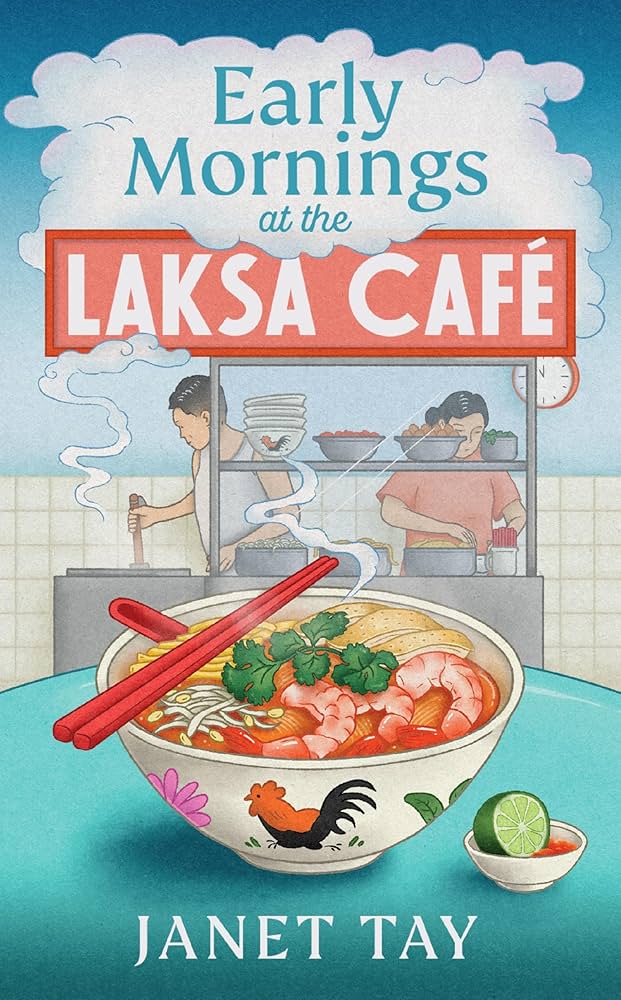
There’s a growing category of fiction often described as “healing literature,” usually built around food, small communities, intergenerational relationships, and emotionally wounded characters learning how to reconnect with themselves. Many novels within that space can feel interchangeable after a while—comforting, certainly, but sometimes so carefully gentle that they lose narrative tension altogether.
Early Mornings at the Laksa Cafe by Janet Tay largely avoids that problem because beneath its warmth lies genuine emotional conflict. This is a novel about family legacy, migration, regret, ambition, and the difficult question of whether preserving tradition always requires personal sacrifice.
Set in Kuching, Sarawak, the novel centres around a family-run laksa shop whose future becomes increasingly uncertain as generational tensions resurface. The premise immediately invites comparison to the wave of Japanese and Korean healing fiction that has become internationally popular in recent years, but Early Mornings at the Laksa Cafe feels distinctly Southeast Asian in both atmosphere and emotional texture. Critics have even described it as part of an emerging form of “Southeast Asian healing fiction.”
What struck me most while reading the novel is how much sadness exists beneath its comforting exterior. This is not merely a cozy food story. It’s a novel about people who love each other deeply but struggle to understand one another across generations, expectations, and unspoken disappointments.
For readers wondering, Is Early Mornings at the Laksa Cafe worth reading?—absolutely. It’s a heartfelt, emotionally sincere debut that succeeds because it understands that healing is rarely simple or sentimental.
Themes and Deeper Meaning
At its core, Early Mornings at the Laksa Cafe is about inheritance—not simply financial inheritance, but emotional and cultural inheritance.
Ah Hock views the laksa shop as something larger than a business. It represents family continuity, sacrifice, identity, and memory. For him, preserving the shop feels inseparable from preserving the family itself.
Wei Ming, meanwhile, represents a different generational reality. He does not reject his heritage outright, but he also refuses to define his life entirely through it. What makes the conflict effective is that neither perspective feels entirely wrong. The novel understands how difficult it can be to honour tradition without becoming trapped by it.
I found the father-son dynamic especially moving because it avoids easy sentimentality. Ah Hock and Wei Ming genuinely love each other, yet much of that love remains buried beneath disappointment, pride, and years of miscommunication. The emotional tension comes not from dramatic betrayals but from accumulated misunderstanding.
Food functions as both symbol and emotional language throughout the novel. The laksa broth carries family history, memory, and obligation. What could have become a cliché about “recipes connecting generations” instead feels surprisingly grounded because Janet Tay consistently ties food to labour and sacrifice rather than pure nostalgia.
Another strong theme is migration and ambition. Wei Ming’s years in Hong Kong reveal the emotional cost of pursuing success elsewhere while leaving family behind. The novel repeatedly questions how much people should sacrifice in pursuit of individual dreams—and whether success actually resolves the emotional absences that motivated the pursuit in the first place.
There’s also a quiet exploration of masculinity running beneath the story. Both Ah Hock and Wei Ming struggle to articulate affection directly. Their relationship is shaped by action, duty, criticism, and silence far more than emotional openness.
Writing Style and Narrative Voice
Janet Tay writes with warmth and clarity.
The prose is accessible without feeling simplistic, and the descriptions of Kuching, food preparation, and everyday routines create a strong sense of place. Several reviewers have highlighted how immersive the food writing feels, and I agree. The novel’s sensory details are among its greatest strengths.
What impressed me most is how naturally the food elements integrate into the narrative. The laksa never feels like a marketing gimmick or aesthetic backdrop. Instead, it remains tied directly to character, memory, and conflict.
The pacing is gentle but steady. Readers expecting a highly plot-driven novel may find the rhythm somewhat slow, particularly in the middle sections where emotional reflection often takes precedence over dramatic developments. But the slower pace suits the novel’s themes.
The narrative voice also aligns well with the healing-fiction genre without becoming excessively sentimental. There are moments of comfort and optimism, certainly, but the novel generally earns its emotional resolutions rather than forcing them.
At times, certain emotional revelations feel slightly predictable, particularly for readers familiar with intergenerational family dramas. Still, the sincerity of the writing largely compensates for that familiarity.
Character Analysis
Ah Hock emerges as the novel’s emotional anchor.
What makes him compelling is that he never becomes merely a symbol of tradition. He is stubborn, proud, occasionally difficult, and deeply attached to the life he has built. Yet the novel also reveals his vulnerability as he confronts aging and the possibility that everything he has spent decades preserving may disappear after him.
Wei Ming is equally effective because his frustrations feel understandable. He does not simply reject the family business out of selfishness. He wants autonomy, recognition, and the opportunity to define himself beyond inherited expectations.
I appreciated that Janet Tay refuses to turn either character into a villain. The conflict works precisely because both men carry legitimate emotional wounds and reasonable desires.
The supporting characters add texture to the family dynamic without overwhelming the central relationship. Several secondary figures help reveal different perspectives on legacy, obligation, and belonging, though the novel remains firmly focused on Ah Hock and Wei Ming’s emotional journey.
Strengths of the Book
One of the novel’s greatest strengths is its emotional sincerity.
The father-son relationship feels authentic because it resists melodrama. The conflicts emerge naturally from personality differences, generational expectations, and accumulated misunderstandings rather than manufactured plot twists.
The setting is another major strength. Kuching feels vividly realised throughout the novel. The laksa shop, the streets, the routines, and the food all contribute to a strong sense of atmosphere.
I also appreciated how effectively Janet Tay balances comfort with emotional weight. Many healing-fiction novels become so focused on coziness that tension disappears entirely. Here, genuine emotional stakes remain present throughout.
And perhaps most importantly, the novel understands that tradition itself can be both comforting and burdensome simultaneously.
Weaknesses or Criticisms
That said, Early Mornings at the Laksa Cafe occasionally leans toward familiarity.
Readers who consume large amounts of family-centred literary fiction may recognise certain narrative patterns early on. The broad emotional trajectory is not especially surprising.
Some secondary characters could also have benefited from greater development. Because the novel remains so focused on Ah Hock and Wei Ming, a few supporting relationships feel somewhat underexplored.
There are also moments where the dialogue becomes slightly explanatory, particularly during emotionally significant conversations.
Still, these are relatively minor criticisms within the context of the novel’s overall effectiveness.
Overall Reading Experience
Reading Early Mornings at the Laksa Cafe felt comforting, but not in a superficial way.
The novel creates warmth without pretending life’s complications can be solved neatly. There’s sadness here, particularly around aging, regret, and changing family structures.
I found myself most affected by the quieter scenes: early-morning food preparation, small conversations, moments where characters almost say what they truly feel but stop themselves.
The atmosphere lingers long after finishing the book. Not because of dramatic twists, but because the emotional conflicts feel recognisable and deeply human.
Who Should Read This Book?
If you’re asking, Who should read Early Mornings at the Laksa Cafe?—this novel is ideal for readers who enjoy family sagas, food-centred fiction, and emotionally reflective literary fiction.
If you appreciated Days at the Morisaki Bookshop, Before the Coffee Gets Cold, or Sweet Braised Duck, this will likely resonate strongly.
It’s especially suited to readers interested in Southeast Asian settings, intergenerational relationships, food culture, and stories about balancing personal ambition with family responsibility.
Final Verdict
Early Mornings at the Laksa Cafe is a warm, emotionally grounded novel about family, heritage, and the complicated inheritance of love.
Janet Tay’s debut succeeds because it understands that traditions are never simply recipes or rituals. They are emotional structures built from memory, sacrifice, obligation, and hope.
So, is Early Mornings at the Laksa Cafe worth reading? Absolutely.
It may fit comfortably within the healing-fiction tradition, but it distinguishes itself through its distinctly Malaysian setting, its heartfelt father-son relationship, and its refusal to reduce generational conflict into easy answers. Like the broth at the centre of the story, the novel’s emotional richness comes from patience, history, and everything that has been quietly simmering beneath the surface for years.

Editor
Best Book Review Guide publishes independent reviews and reading guides written to help readers make better reading choices.