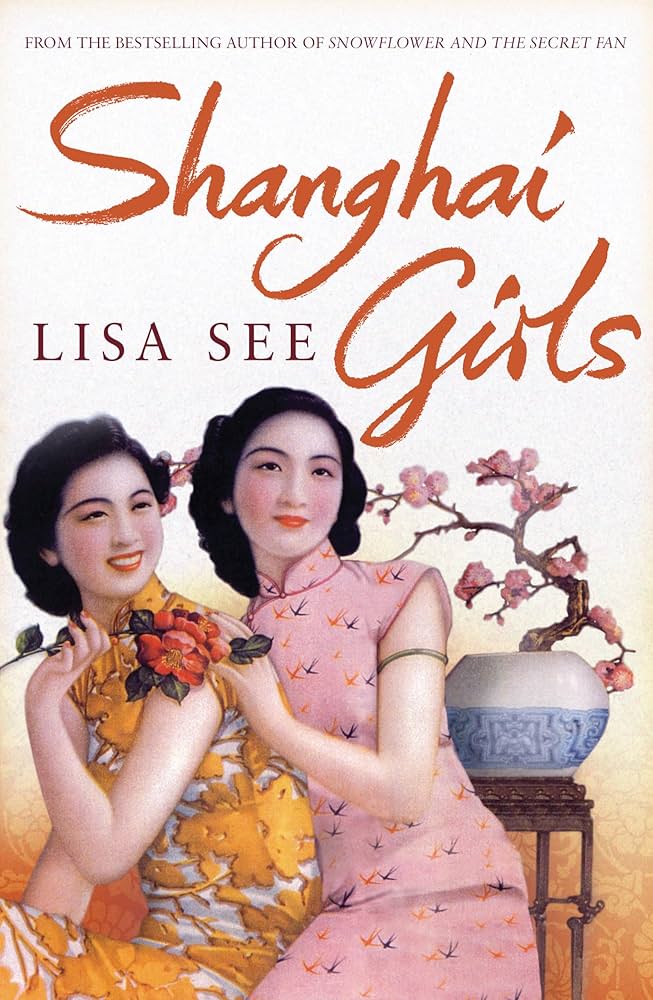
Author: Lisa See
Genre: Novel, Historical Fiction, Domestic Fiction
Some novels announce their emotional weight early. Others draw you in gently, almost deceptively, before revealing the depth of what they carry. Shanghai Girls by Lisa See belongs firmly to the latter category—a work that begins with glamour and sisterly intimacy, then slowly tightens into something far more complex and enduring.
Lisa See has long been known for excavating overlooked corners of Chinese and Chinese American history, often through the lens of women’s lives. With Shanghai Girls, she turns her attention to the early 20th century diaspora, tracing the journey of two sisters uprooted from a privileged life in Shanghai and forced into a future they never imagined. The novel has earned sustained attention not only for its storytelling, but for how it reframes familiar immigration narratives through a distinctly female, culturally specific perspective.
For readers asking, Is Shanghai Girls worth reading?—the answer is a confident yes, particularly if you are drawn to historical fiction that balances personal storytelling with broader social realities.
Summary (Spoiler-Free Overview)
Shanghai Girls opens in 1937, in a Shanghai that feels vibrant, cosmopolitan, and just slightly precarious beneath the surface. Sisters Pearl and May Chin live a life of relative privilege, working as “beautiful girls”—models who pose for calendar advertisements, embodying modernity and glamour in a rapidly changing China.
Their world, however, is fragile. When their father’s financial mismanagement comes to light, the sisters are abruptly sold into arranged marriages to Chinese American brothers they have never met. What follows is a forced migration to the United States, where the sisters must navigate not only unfamiliar terrain, but also the constraints of immigration laws, cultural expectations, and the complicated dynamics of their own relationship.
The novel traces their journey from Shanghai to Los Angeles, where they confront the realities of life in Chinatown, including prejudice, economic hardship, and rigid gender roles. At its heart, the story is less about external conflict and more about how the sisters adapt—individually and together—to a life that diverges sharply from the one they once knew.
Without veering into plot revelations, it’s safe to say that the novel’s emotional centre lies in the evolving relationship between Pearl and May, shaped by love, rivalry, loyalty, and secrets.
Themes and Deeper Meaning
What elevates Shanghai Girls beyond a straightforward historical narrative is its exploration of identity in transition. The novel examines what it means to lose not only a home, but a sense of self—and how that self is reshaped in exile.
One of the most striking themes is the tension between appearance and reality. In Shanghai, Pearl and May are literally paid to project an image—beauty, modernity, sophistication. This motif carries through the novel, evolving into a broader meditation on performance. As immigrants in America, the sisters must again adopt roles, this time to survive within the expectations of their new environment. Identity becomes something negotiated rather than inherent.
Sisterhood forms the emotional backbone of the novel. See resists the temptation to romanticise it. Instead, she portrays it in all its contradictions: protective yet competitive, intimate yet fraught with misunderstanding. The bond between Pearl and May is not static; it shifts under the pressure of new circumstances, revealing both its strength and its fragility.
Another significant theme is the immigrant experience, particularly within the context of restrictive U.S. policies such as the Chinese Exclusion Act and its lingering effects. See integrates these historical realities seamlessly into the narrative, showing how bureaucratic structures shape personal lives in profound ways.
There is also an undercurrent of resilience—not the triumphant, overt kind, but a quieter endurance. The characters persist not because they are heroic in a conventional sense, but because they must. Survival, in this novel, is often an act of compromise.
Writing Style and Narrative Voice
Lisa See’s prose is accessible yet textured, striking a balance between clarity and emotional nuance. She writes in a first-person narrative from Pearl’s perspective, a choice that grounds the novel in a deeply personal voice.
Pearl’s narration is observant and, at times, introspective, though it retains a certain restraint. She does not always fully understand her own emotions as they unfold, which lends the narrative an authenticity that feels true to life. There is a reflective quality to her voice, as though she is piecing together meaning in hindsight.
The pacing is steady, with a structure that mirrors the characters’ journey—beginning with relative ease, then gradually tightening as circumstances grow more complex. See avoids overly dramatic flourishes, allowing tension to build organically through situation and character interaction.
Descriptions of Shanghai are vivid without being excessive, capturing both its glamour and its instability. In contrast, the depiction of Los Angeles Chinatown is more subdued, reflecting the constrained reality the sisters encounter. This shift in tone is handled with care, reinforcing the thematic transition from freedom to restriction.
While the prose does not aim for lyrical experimentation, it is effective in its precision. See prioritises storytelling, ensuring that the narrative remains engaging while still offering moments of quiet reflection.
Character Analysis
At the centre of Shanghai Girls are Pearl and May, two sisters whose differences define much of the novel’s emotional landscape.
Pearl, as the narrator, is more cautious and introspective. She is acutely aware of societal expectations and often internalises her struggles. Her journey is one of gradual self-realisation, shaped by both external pressures and her evolving understanding of her relationship with May.
May, in contrast, is impulsive, charismatic, and seemingly carefree. She embraces attention and appears less burdened by the constraints that weigh on Pearl. Yet this outward ease masks a more complex inner life, one that becomes increasingly apparent as the story progresses.
What makes their relationship compelling is its imbalance. Pearl often feels overshadowed by May, yet also deeply responsible for her. This dynamic creates a tension that drives much of the narrative, particularly as circumstances force them into roles neither fully chose.
The supporting characters, including their husbands and members of the Chinatown community, are drawn with enough detail to feel real without detracting from the central focus. They serve as both anchors and obstacles, shaping the sisters’ experience in subtle but meaningful ways.
Strengths of the Book
One of the novel’s greatest strengths is its ability to humanise historical events. Rather than presenting history as a backdrop, Lisa See integrates it into the characters’ daily lives, making its impact immediate and tangible.
The portrayal of sisterhood is another standout element. It feels honest and unpolished, capturing the complexities of a relationship that is both deeply loving and occasionally strained.
See’s attention to cultural detail adds depth to the narrative. From the social norms of pre-war Shanghai to the intricacies of Chinatown life in Los Angeles, the settings are rendered with care and specificity.
The novel also succeeds in maintaining emotional engagement without resorting to melodrama. Its impact comes from accumulation—small moments that build into something more substantial.
Weaknesses or Criticisms
While Shanghai Girls is effective in many respects, it is not without its limitations.
At times, the narrative leans toward predictability, particularly in its exploration of certain themes. Readers familiar with immigration stories may find some elements familiar, though See’s focus on sisterhood offers a distinctive angle.
The pacing, while generally consistent, can feel uneven in places. Certain developments occur quickly, leaving less room for deeper exploration.
Additionally, because the story is told entirely from Pearl’s perspective, other characters—particularly May—can feel somewhat filtered. While this is a deliberate narrative choice, it occasionally limits the depth of insight into their motivations.
Overall Reading Experience
Reading Shanghai Girls is an immersive experience, though not in an overwhelming sense. It draws you in gradually, allowing you to settle into its world before revealing its emotional complexities.
There is a steady rhythm to the novel, one that mirrors the characters’ adaptation to their new lives. The emotional impact is cumulative rather than immediate, building through a series of interconnected moments.
It is a book that invites reflection. Long after finishing it, certain scenes linger—not because they are dramatic, but because they feel true.
Who Should Read This Book?
If you’re wondering, Who should read Shanghai Girls?—this novel will resonate with readers who appreciate character-driven historical fiction.
If you enjoyed works that explore immigration, family dynamics, or the complexities of identity, this book will likely appeal to you. Readers of authors who focus on personal narratives within broader historical contexts will find much to appreciate here.
It is particularly suited to those interested in Chinese or Chinese American history, as well as stories centred on women’s experiences.
Final Verdict
Shanghai Girls by Lisa See is a quietly powerful novel that balances historical detail with emotional depth. It does not rely on grand gestures or dramatic twists; instead, it builds its impact through carefully observed moments and a nuanced portrayal of human relationships.
It is a story about displacement, identity, and the bonds that endure even under strain. While it may not surprise in every aspect, it remains deeply engaging, anchored by its strong character work and thoughtful themes.
For readers willing to invest in its measured pace, Shanghai Girls offers a rich and rewarding experience—one that lingers, much like the lives it so carefully brings to the page.

Leave a Reply