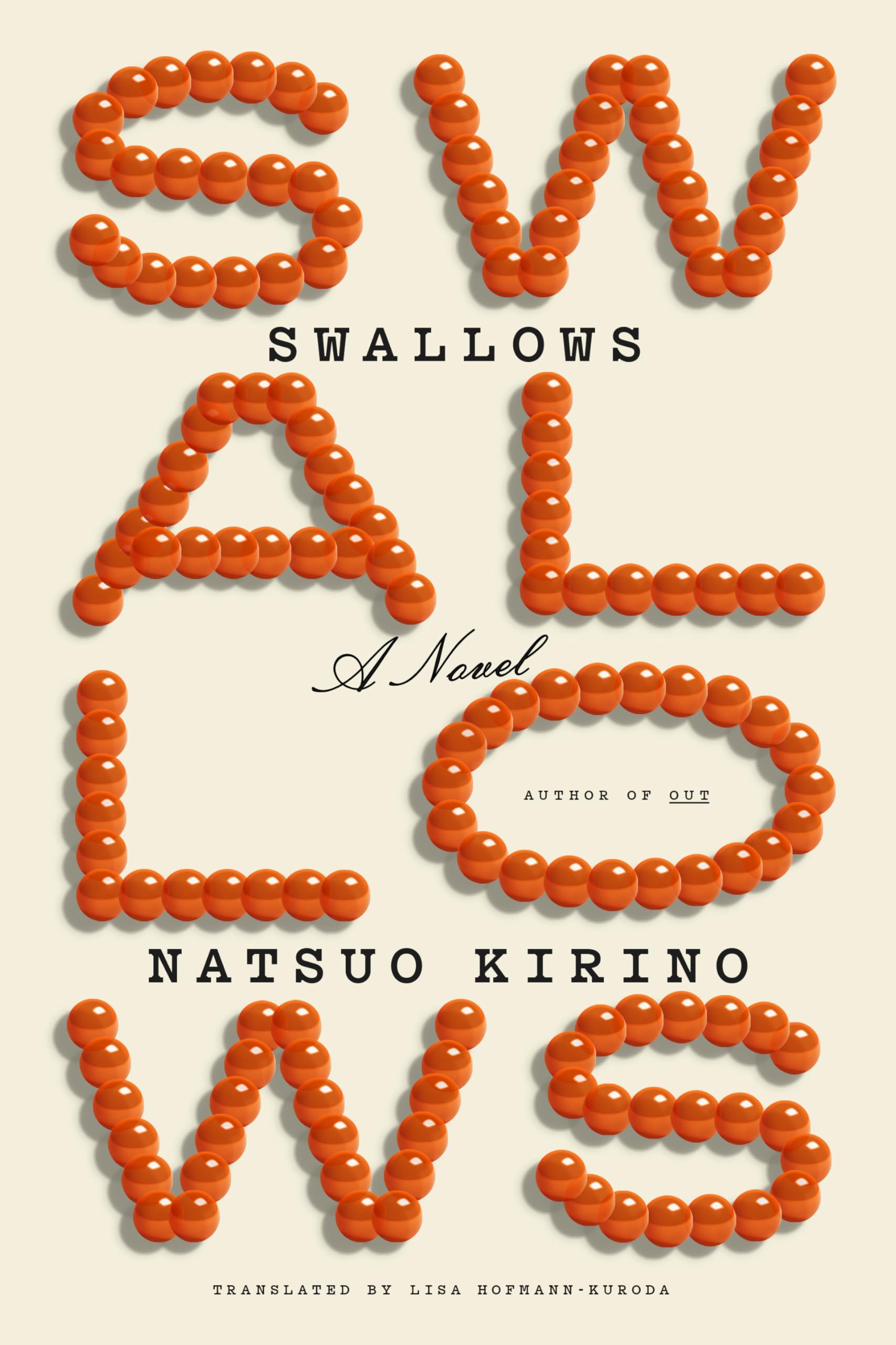
Author: Natsuo Kirino
Genre: Japanese literature, Contemporary
There’s a particular kind of unease that runs through much of Natsuo Kirino’s work—a psychological tension that doesn’t rely on overt violence so much as it lingers in the spaces between people. Swallows is a lesser-discussed entry in her body of work, especially when compared to titles like Out or Grotesque, but it carries many of the same preoccupations: alienation, fractured identity, and the uneasy performance of self in modern society.
What struck me immediately about Swallows is how contained it feels. Where some of Kirino’s better-known novels sprawl across multiple perspectives and darker plotlines, this one is more intimate, almost claustrophobic in its focus. It reads less like a thriller and more like a slow psychological unraveling, one that reveals itself not through dramatic twists but through subtle shifts in perception.
Going in, I expected something sharper, perhaps more overtly disturbing in the way Kirino often is. Instead, I found something quieter, though no less unsettling. It’s the kind of novel that doesn’t necessarily grip you in the traditional sense, but it stays with you, lingering in small, uncomfortable ways.
For readers asking, Is Swallows by Natsuo Kirino worth reading?—the answer is yes, though it rewards patience and a willingness to sit with ambiguity.
Summary (Spoiler-Free Overview)
Swallows follows a young woman navigating the complexities of identity, relationships, and self-perception in contemporary Japan.
The narrative centres on her interactions within a small, somewhat insular social environment—one that becomes increasingly fraught as underlying tensions begin to surface. What initially appears to be a relatively ordinary setting gradually takes on a more disquieting tone, as the boundaries between authenticity and performance blur.
There is no single, dominating conflict. Instead, the story unfolds through a series of encounters and internal reflections. Relationships shift subtly, perceptions change, and what seemed stable begins to feel uncertain.
The title itself—Swallows—functions more as a symbolic thread than a literal one, suggesting movement, migration, perhaps even escape. Yet the novel is less about leaving than it is about being unable to fully settle.
Rather than building toward a dramatic resolution, the narrative accumulates tension quietly, leaving much open to interpretation.
Themes and Deeper Meaning
One of the most compelling aspects of Swallows is its exploration of identity as something constructed and, at times, fragile.
Kirino has always been interested in the roles people play, particularly women navigating societal expectations, and this novel continues that line of inquiry. The protagonist is acutely aware of how she is perceived, and much of her internal conflict revolves around the gap between that perception and her own sense of self.
What I found particularly striking is how subtle this exploration is. There are no grand declarations about identity or society. Instead, the novel presents small, almost mundane situations that gradually take on a deeper significance.
There is also an undercurrent of loneliness that runs through the book. Characters exist in proximity to one another, yet true connection feels elusive. This sense of emotional distance is not dramatic, but persistent.
The theme of observation—of watching and being watched—also plays a key role. The protagonist’s awareness of others’ perceptions creates a kind of feedback loop, where behaviour is constantly adjusted in response to imagined judgments.
At times, I found this both fascinating and slightly exhausting, which, in retrospect, feels entirely appropriate. The novel captures the mental strain of sustained self-consciousness with unsettling accuracy.
Writing Style and Narrative Voice
Kirino’s prose in Swallows is restrained, even minimalistic at times. It doesn’t draw attention to itself, and there are few moments of overt stylistic flourish.
The narrative voice is closely aligned with the protagonist’s perspective, creating an intimate, almost enclosed reading experience. This works well in establishing the novel’s psychological tone, though it can also contribute to a sense of confinement.
Pacing is deliberate. The novel unfolds slowly, with an emphasis on atmosphere rather than plot. I’ll admit that there were moments where I wished for a bit more momentum, particularly in the middle sections. But the slow build ultimately serves the book’s larger purpose.
What stands out is how much is left unsaid. Kirino relies heavily on implication, allowing tension to emerge from what is not explicitly articulated. This requires a certain level of engagement from the reader, but it also makes the experience more immersive.
Character Analysis
The protagonist of Swallows is, in many ways, difficult to fully grasp—and I suspect that’s intentional.
She is observant, introspective, and often uncertain. Much of her character is defined by how she perceives others and how she believes she is perceived in return. This creates a layered but somewhat elusive portrayal.
I found myself both intrigued and slightly distanced from her. There were moments where her internal reflections felt sharply accurate, capturing the nuances of self-doubt and social awareness. At the same time, her emotional opacity made it challenging to form a strong connection.
The supporting characters are similarly understated. They are defined more by their interactions with the protagonist than by independent arcs. This reinforces the novel’s focus on perception, but it does mean that some characters feel more like extensions of the protagonist’s experience than fully realised individuals.
Strengths of the Book
One of the novel’s greatest strengths is its psychological precision. Kirino captures the subtleties of social interaction and internal conflict with a level of detail that feels both realistic and unsettling.
The atmosphere is another standout element. There is a quiet tension that permeates the book, one that builds gradually without relying on overt drama.
I also appreciated the novel’s restraint. It doesn’t over-explain its themes or characters, allowing readers to engage with the material in a more active way.
Additionally, the focus on everyday situations gives the story a sense of authenticity. The unsettling aspects emerge not from extreme events, but from familiar contexts that begin to feel slightly off.
Weaknesses or Criticisms
At the same time, the novel’s subtlety may not work for everyone.
The pacing, while deliberate, can feel slow, particularly for readers expecting a more plot-driven narrative. There were sections where I found my attention drifting, even as I appreciated the overall tone.
The emotional distance is another potential limitation. While it aligns with the book’s themes, it can make it difficult to fully invest in the characters.
Additionally, the lack of a clear resolution may be frustrating for some readers. The novel leaves much open-ended, which feels appropriate but may not satisfy those looking for closure.
Overall Reading Experience
Reading Swallows felt, to me, like sitting in a quiet room where something isn’t quite right, though you can’t immediately identify what it is.
It’s not a book that demands to be devoured in one sitting. Instead, it unfolds gradually, encouraging a slower, more reflective pace.
Emotionally, the experience is subtle rather than intense. The impact comes less from dramatic moments and more from the accumulation of small, disquieting details.
Who Should Read This Book?
If you’re wondering, Who should read Swallows by Natsuo Kirino?—this novel is best suited for readers who appreciate psychological fiction with a strong emphasis on atmosphere and internal conflict.
If you enjoyed Kirino’s other works but are open to something quieter and more introspective, this will likely appeal.
It’s also a good fit for readers who value ambiguity and are comfortable with narratives that leave questions unresolved.
Final Verdict
Swallows by Natsuo Kirino is a restrained, quietly unsettling novel that trades dramatic plot for psychological depth.
It may not have the immediate impact of her more famous works, but it offers something different—a more intimate exploration of identity, perception, and emotional distance.
So, is Swallows worth reading? Yes, particularly if you approach it with the right expectations.
It’s not a novel that reveals itself all at once. Instead, it lingers, gradually shifting in your mind, much like the uneasy feeling it so carefully creates.
Leave a Reply